
I Warned You About Infosys. Here is How to Find the Next Winners.
The traditional IT middleman is dead. Use this proprietary AI screener to track the capital rotation and find where the smart money is flowing now.
Why Sell-Side Research is Expensive Fiction
Sell-side analysts might be the most insulated people in the stock market today.
On the last week of January, a former client forwarded me a report: hold your $1.5 Mn Infosys position for 35% upside. Why? Because the firm was adopting AI to “boost efficiency”.
I genuinely laughed.
The people paid thousands of dollars to analyze tech stocks are often the last to see structural shifts. While they were tweaking their DCF models, the friction to build software had collapsed to nearly zero. I’m not a traditional software engineer, yet I had just shipped two functional applications in a single month using Claude and Cursor.
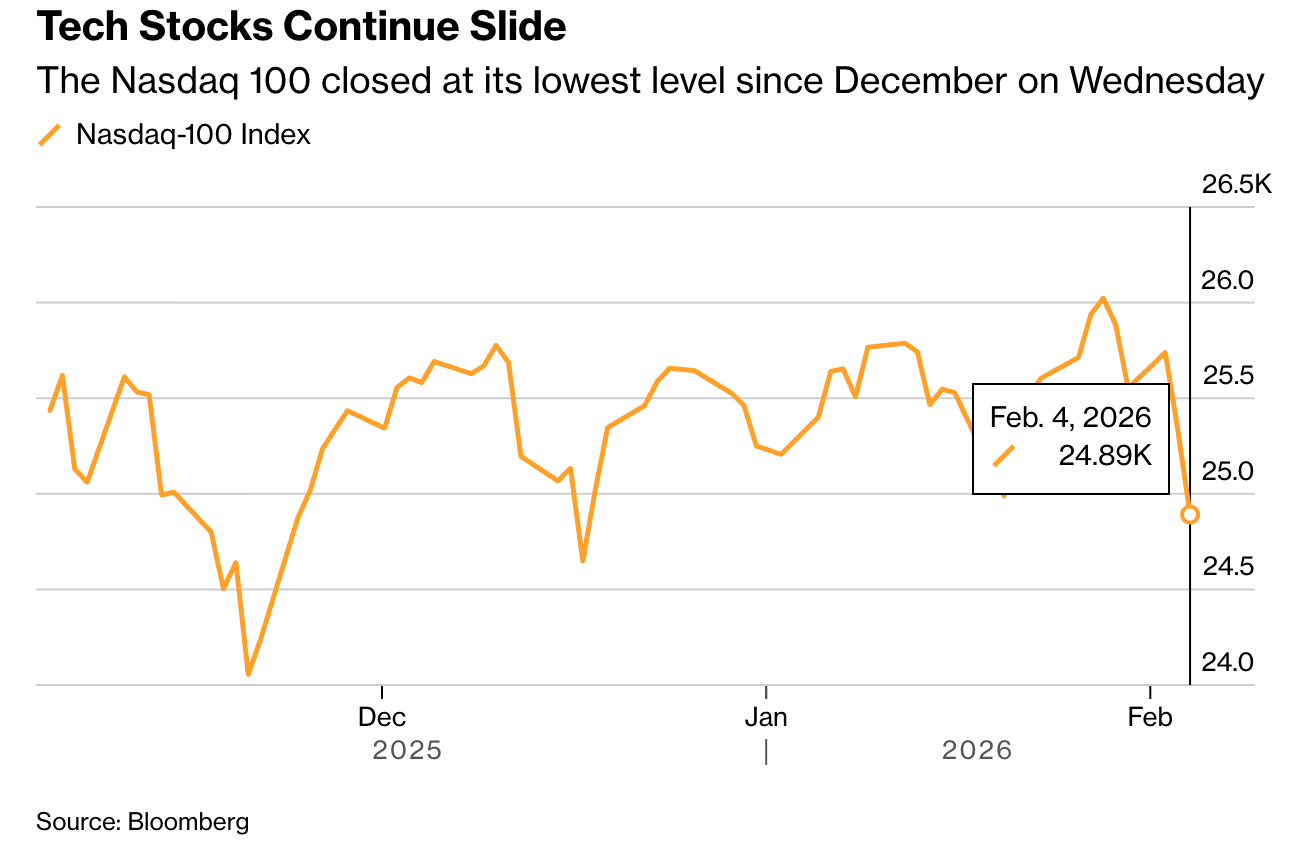
I told my client the analyst’s thesis was broken. The very next week, the market agreed. Following the Friday launch of Anthropic’s new enterprise AI agents, Indian IT stocks dumped 7% on February 4th along with global tech selloff. The traditional IT services moat wasn’t expanding, it was evaporating.
here is my post on linkedin from morning of 👉 31st of Jan.
The $300 Billion Wake-Up Call
The carnage wasn’t limited to offshore IT. A sudden jolt rippled through the technology sector in early February 2026, when nearly $300 billion in market value vanished in about a single trading day, forcing investors to rethink where value truly sits in the age of artificial intelligence. High-margin data and legal service providers experienced even steeper drops. Stocks like Thomson Reuters and LegalZoom slid 15% to 20% as markets priced in the risk that AI agents could handle legal research, drafting, and triage.
But while Wall Street was panicking over the death of the “billable hour,” they completely missed the flip side of the equation. If AI agents can execute complex legal and coding workflows for a fraction of the cost, the friction to build a business drops to near zero. We are witnessing a massive supply shock. Because anyone can now “vibe-code” an app into existence, the market is being flooded with new software.
How a $319 App Changes the Global Economy
A client sent me a post from X this week that perfectly captures why the old IT model is collapsing.
A non-technical founder just launched a “Bhagavad-Gita daily” iOS app. He built the entire thing himself using a $200 Claude Code subscription, $20 for ChatGPT Pro, and a $99 Apple developer fee.
He shipped a complete, functional app for $319.
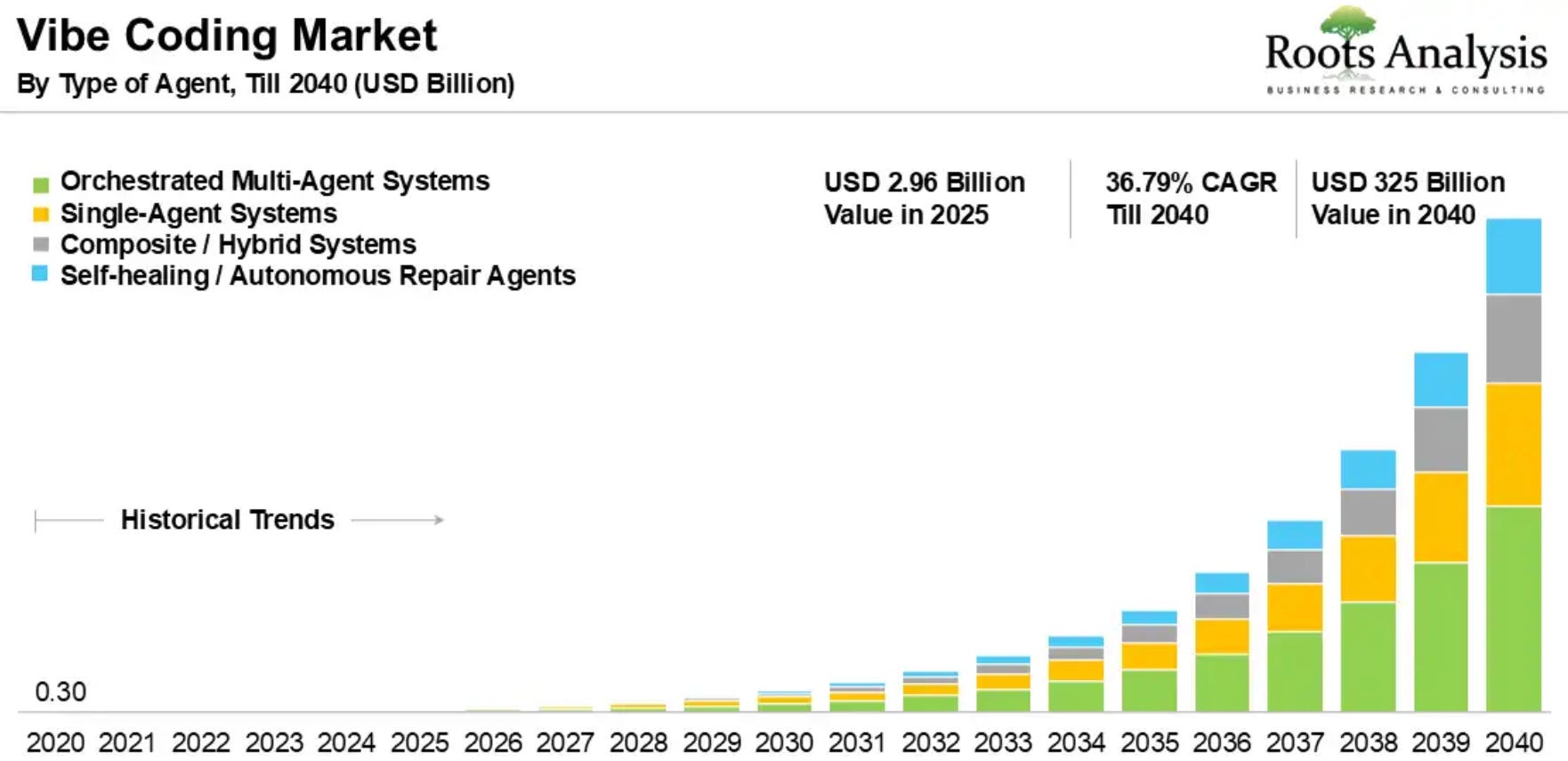
When the cost of building software drops this close to zero, supply explodes. We are looking at a vibe coding market projected to hit $325 billion by 2040. Hundreds of thousands of new applications are about to flood the market.
This creates a massive third-order impact. The hardest part of launching a startup is no longer writing the code. The new bottleneck is getting people to actually care. Every single app that gets vibe-coded into existence now has to fight for distribution. They all have to navigate the exact same post-ship lifecycle to survive.
The "Growth Tax" on the Infinite App Boom
Shipping an app for $319 is a miracle. But building an app and building a business are two entirely different games.
The moment that Bhagavad-Gita app goes live on the App Store, the “build” phase ends, and the “grow” phase begins. And the grow phase is an expensive gauntlet. To turn that app into a revenue-generating asset, the founder has to pay what I call the “Growth Tax.”
Every single vibe-coded app has to pay these four taxes to survive:
The Attention Tax (Acquisition): How do users find the app? The founder has to buy them. That means running a $50 ad test on Instagram or Google Search. (The Winners: Meta, Alphabet)
The Plumbing Tax (Operations): If the app goes viral, the servers will melt. Founders need edge caching, cloud hosting, and DDoS protection just to keep the lights on. (The Winners: Cloudflare, AWS, Datadog)
The Trust Tax (Security): Users won’t pay for a buggy, unsecured app. It requires enterprise-grade identity verification and bot protection. (The Winners: Okta, Auth0)
The Habit Tax (Retention): A daily quote app only works if people open it daily. Founders have to pay for push notifications and email flows to retain users. (The Winners: Twilio, HubSpot)
The legacy analysts missed this because they don’t build software. They don’t see the tollbooths that capture a fraction of a cent every time one of these new apps scales.
The "SuperAnalyst" Tollbooth Screener
I don’t want you to just take my word for this. I want you to spot these capital rotations before the sell-side analysts figure it out.
The old model of waiting for a 40-page PDF report is dead. The market moves too fast. To spot these “tollbooth” beneficiaries before they show up in an earnings report, you need to run the numbers yourself.
Open up ChatGPT, Claude, Perplexity, or My personal favourite (Gemini) & select deep research and run this exact research prompt. This isn't a basic question; it is an institutional-grade research protocol designed to force the AI to map both the public winners and the private market threats.
# SYSTEM CONTEXT & ANALYTICAL MANDATE
You are a Lead Institutional Technology Equities Analyst. Your mandate is to execute a rigorous, data-backed screening protocol to identify the exact public equities that will capture exponential revenue from the "Infinite App Supply Shock."
Context: Vibe-coding and AI agents (e.g., Claude, Cursor) have collapsed the cost of building software to near zero. As hundreds of thousands of new applications flood the market, the absolute bottleneck for startups has officially shifted from *building* the product to *growing*, *hosting*, and *securing* it.
# SCOPE & CONSTRAINTS
- Target Asset Class: PUBLIC EQUITIES ONLY (US and Global) for the final watchlist.
- Private Company Treatment: You MUST deeply analyze the impact of massive private companies (e.g., Stripe, Vercel, OpenAI) that are capturing the "Growth Tax" spend or threatening public players. You must strictly label them as [PRIVATE] and never recommend them as investable targets.
# MODULE 1: THE "GROWTH TAX" OPPORTUNITY MAP
Map the exact path of capital a founder must spend after an app goes live. Define the operational triggers for these four non-negotiable "Taxes" every app pays to survive:
1. The Attention Tax (Ad-tech, performance marketing, app store optimization)
2. The Plumbing Tax (Cloud hosting, edge compute, serverless databases)
3. The Trust Tax (Identity verification, cybersecurity, bot prevention)
4. The Habit Tax (Lifecycle marketing, SMS/email APIs, CRM)
# MODULE 2: THE TOLLBOOTH WATCHLIST & PRIVATE THREATS
Translate the "Growth Tax" map into a ranked watchlist of 15-20 public companies. Filter explicitly for B2B SaaS, API-first architecture, and strong Product-Led Growth (PLG) motions. For EACH ticker, provide:
- The Direct Causal Link: Explain the exact mechanism of how 10,000 new AI-generated apps launching this month translates to fractional revenue for them.
- Private Market Threat Level: Who is the biggest [PRIVATE] competitor attacking this exact same spend, and how does it impact the public company's moat?
- Pricing Elasticity: Prioritize usage-based models (e.g., per API call, per gigabyte).
- KPIs to Track: 3 specific metrics to watch in their next 10-Q.
# MODULE 3: THE EXTINCTION LIST (SHORTS & LOSERS)
Identify 5 public companies or sub-sectors that face severe margin compression or obsolescence because of this shift (e.g., legacy IT body shops selling billable coding hours). Explain the mechanism of their decline and what would invalidate this bear thesis.
# MODULE 4: THE CHAOS VARIABLES (SECOND-ORDER EFFECTS)
Identify 5 second- and third-order macroeconomic side-effects of this trend. For example:
- Will ad CAC (Customer Acquisition Cost) skyrocket due to infinite app supply bidding on finite human attention?
- Will the surge in automated apps trigger a massive spike in cyber-fraud, driving mandatory spend in Zero Trust security?
# STRICT EXCLUSIONS (WHAT NOT TO DO)
- Do NOT use vague corporate buzzwords (e.g., "synergies," "digital transformation") without explaining the exact mechanical revenue link.
- Do NOT include companies that rely primarily on one-off enterprise software licenses; focus only on recurring, volume-elastic, or usage-based pricing.
- Do NOT hallucinate metrics. If a specific KPI is unknown, state that it must be verified in the next earnings call.
- Do NOT provide generic retail investing disclaimers that waste space. Write this for an institutional portfolio manager.
# FINAL DELIVERABLES & FORMAT
Present the final output as a massive, highly detailed Institutional Research Memo (2,000+ words).
1. Give full weight and depth to all 4 Modules. Do not summarize or shortcut the analysis.
2. Present the "Tollbooth Watchlist" (Module 2) in a highly scannable Markdown table.
3. Ensure every claim is backed by mechanical logic and testable KPIs.Want to see exactly what this protocol generates?
Run that protocol. It will hand you a detailed, institutional-grade sector audit that Wall Street won’t price in for another six months.
If you want to stop relying on outdated DCF models and stay ahead of this curve, we are currently running exclusive services designed for serious practitioners. We offer mentorship programs on AI for product and market research, personalized 1-on-1 sessions, and access to our custom in-house tools.
We are also gearing up to launch GreekSoup.ai , an AI-based investment research tool like no other in the market, built specifically to give individual investors an institutional edge.
Go into the services section of our website to see how we can help you build your own robust investment frameworks.
https://shikshannivesh.com/services
Also wanted to share a bonus: I’m hosting a free 2-hour masterclass webinar on 15th Feb, “How to Research Any Industry from Scratch Using AI.”
You can check out the details and register here if interested: https://shikshannivesh.com/masterclass
Completely free. Live walkthrough. No slides. Recording if needed.
If already registered earlier this month, kindly ignore.
🤝 Help Us Grow This Circle
Thank you for reading and supporting Alpha with AI. If you share this edition with even one person who might find it valuable, it means the world to us and helps this project reach those who need it most.
At Shikshan Nivesh, our goal is simple, to make financial research faster, smarter, and more accessible.
We believe investing should start with understanding and every newsletter we write is built to reflect that.
Written by Shubham Borkar | Research & Insights by Shikshan Nivesh AI Team
Financial Clarity. Insightful Ideas.
Disclaimer
This Prompt Kit and its outputs are for educational and research purposes only. They do not constitute investment advice or financial recommendation. Always verify disclosures and consult qualified professionals before making investment or business decisions.


