

AI Terminal: Equity Research Dashboard
Fetch, process, and visualize all key financial data of any listed Indian or Global or U.S. company
Hi everyone, If you’re receiving this email for the first time, it’s because you’d earlier given me permission on LinkedIn to receive my AI-based research tools and long-form prompts for finance and investing.
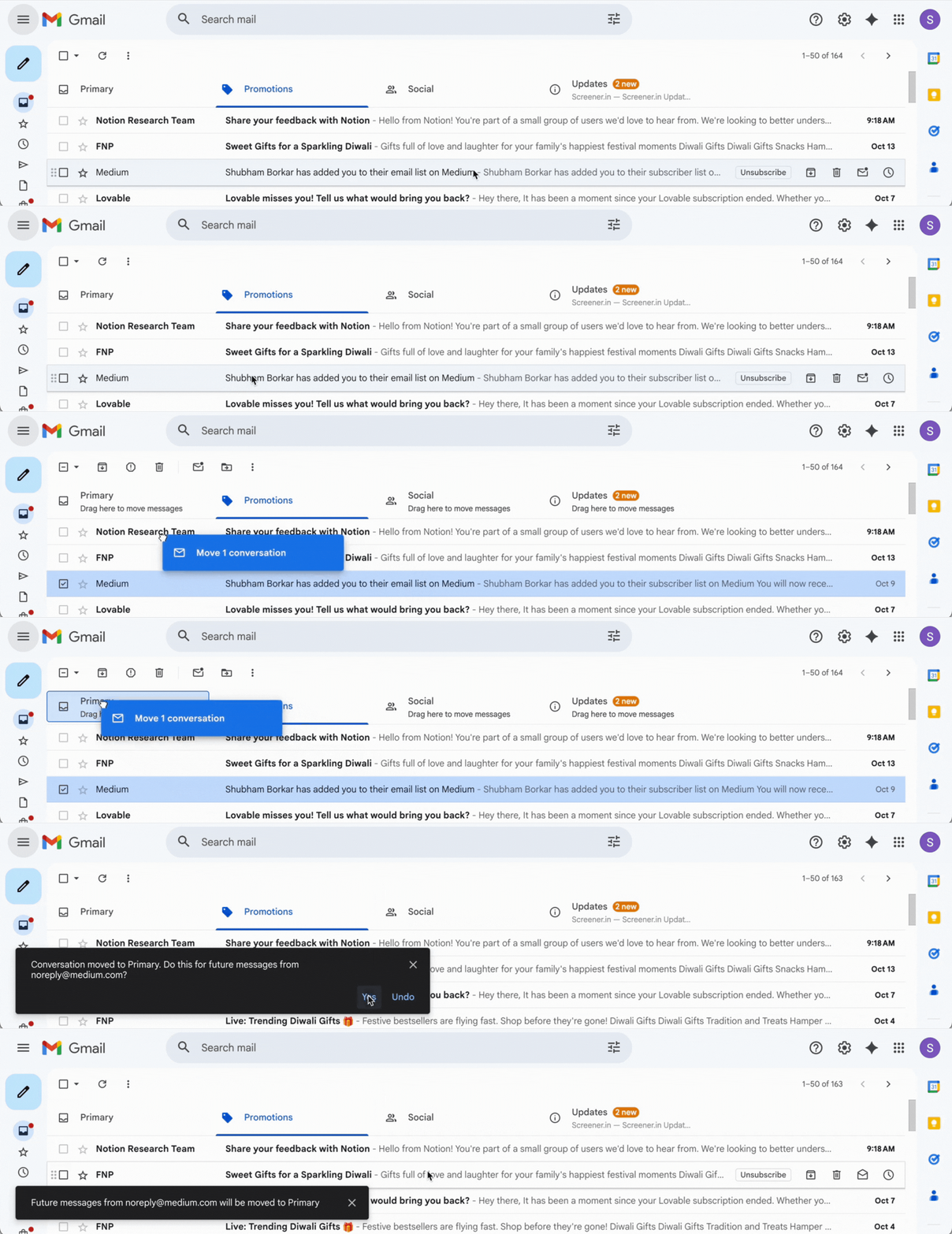
You use Gmail? Do this:
If you use Gmail, you might never receive my emails in your inbox. But you can fix this in 10 seconds:
Reply to this email with “hello!”.
Move this email to your Primary folder like this:’
Be part of open discussions and our Alpha with AI group, it’s free, collaborative, and built to explore, learn, and share ideas.
Premium Equity Research Dashboard
This prompt kit has been built specifically for Perplexity Labs to give analysts, investors, and finance professionals a Instututional-style research experience, using only company filings and AI.
It’s designed to fetch, process, and visualize all key financial data of any listed Indian or Global or U.S. company, directly from public sources like SEC, NSE, BSE, SEBI,and company investor presentations.
Tool Demo
⚙️ Setup Instructions (Perplexity Labs)
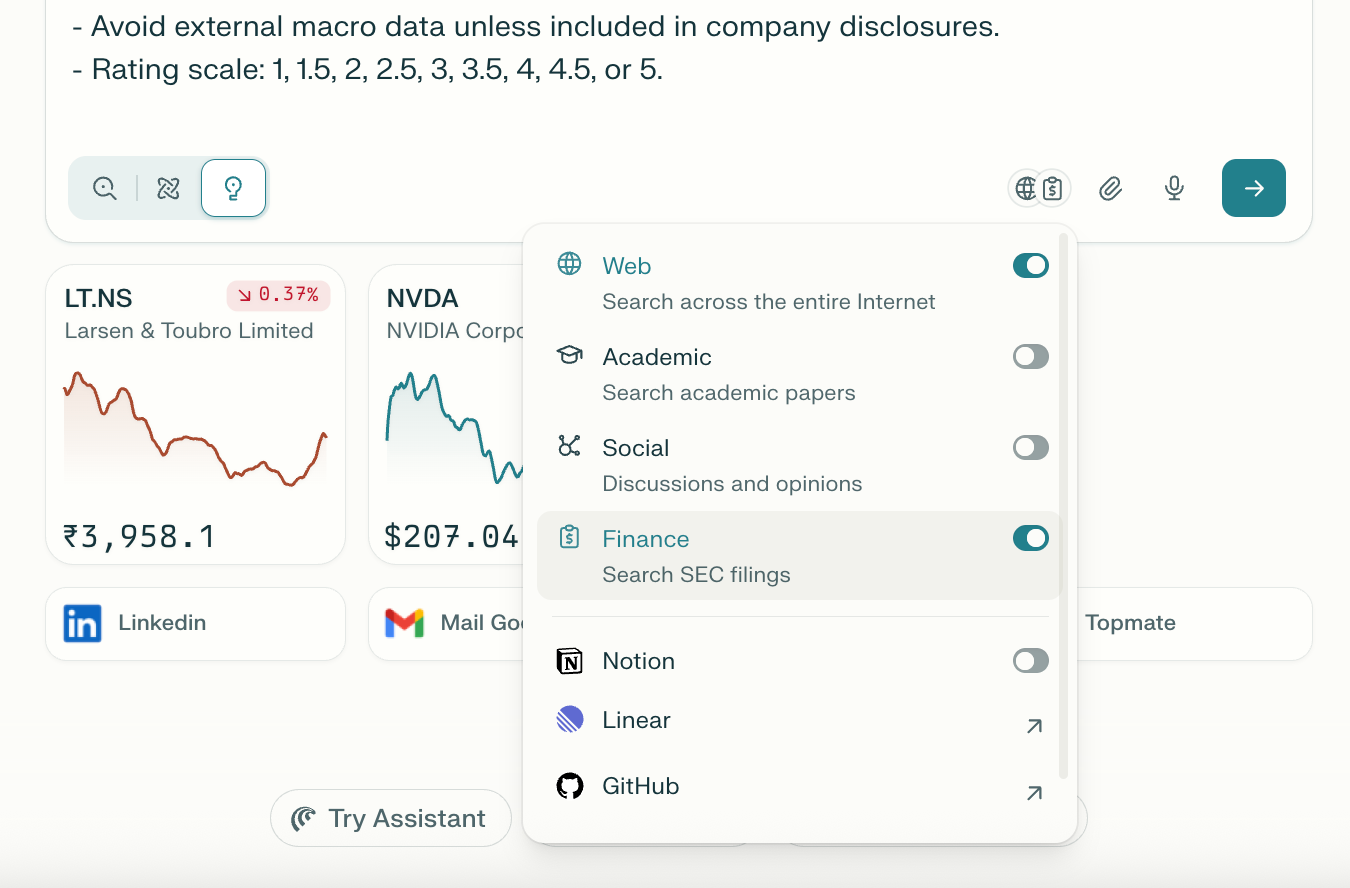
Log in to www.perplexity.ai
and ensure you have an active Pro plan.
Navigate to Labs from the left sidebar.
Enable Web Access and Data Extraction for SEC filings (for global).
Copy and paste the relevant prompt from this article (Indian or Global version).
Insert the company name and ticker as input (e.g., Larsen & Toubro, NSE:L&T).
Wait 10–15 minutes for results, the AI will automatically build a 13-tab visual dashboard with tables, charts, and commentary.
That’s it.
You’ll have an institutional-grade research terminal ready, directly inside your browser.
The Idea Behind This Prompt
Most investors read quarterly reports.
Very few analyze them.
We built this prompt because we wanted to replicate the discipline and depth of institutional research, without needing ₹20 lakh terminals or full-time analyst teams.
The idea was simple:
Could a single AI prompt recreate the same kind of structured financial dashboard that top analysts at JPMorgan, ICICI Securities, or Morgan Stanley use daily?
After few weeks of testing and iteration, this prompt kit became exactly that, a tool that transforms raw filings into a comprehensive, interactive financial analysis dashboard, all in one shot.
How It Works
The prompt fetches public financial filings (annual reports, quarterly results, investor presentations, and concall transcripts) directly from official sources.
Once retrieved, the AI does four core things:
Extracts key financial and management data.
Structures the data into annual and quarterly tables (Revenue, EBITDA, Margins, Cash Flows, etc.).
Visualizes each section as charts and ratio tables.
Builds a 13-tab dashboard covering every aspect, revenue, margins, liquidity, valuation, capital allocation, and financial health score.
Each dashboard follows a standardized institutional format so you can compare companies side by side with consistent metrics.
What’s Inside
The kit contains two prompt variants, each optimized for different markets:
Prompt 1: India Edition
Works with NSE/BSE-listed companies
Fetches SEBI filings, annual reports, and quarterly results
Localized currency formatting (₹ crore)
Sectoral analysis aligned to Indian industry categories
Prompt 2: U.S. & Global Edition
Works with NYSE/NASDAQ-listed companies
Fetches SEC 10-K, 10-Q, and earnings transcripts
Uses USD-based scaling
Includes GAAP-based ratio interpretations
Both prompts follow the same dashboard logic but are fine-tuned for regional data sources and accounting standards.
🔑 Access the Prompt Kit
Below, you’ll find both prompts:
one for Indian companies and one for Global (U.S.) companies.
Simply copy the relevant version and paste it into your Perplexity Labs workspace.
Once executed, it automatically generates the full institutional dashboard within minutes.
Prompt 1: India Edition
You are a financial analyst providing clear, accessible breakdowns of a company’s financial health based on provided data.
Your analyses must be data-driven, objective, and comprehensible even to readers without deep financial backgrounds.
Use only the data in the input — do not speculate or reference external, unverified information.
---
## ANALYSIS STRUCTURE AND CONTENT (INDIA EDITION)
### 1. TitleFinancial Analysis: <Company Name> (<TICKER: NSE/BSE>)
---
### 2. Executive Summary
- Provide a concise 3–4 paragraph overview of the company’s financial situation, highlighting key strengths and weaknesses.
- Discuss performance trends (revenue, margins, debt, cash flow, and ROE/ROCE).
- Include a stock price evolution chart (last 5 years) using NSE/BSE closing prices.
---
### 3. Revenue Analysis
- Create a table showing annual revenue (₹ crore) for the past 10 years, with YoY growth %.
- Create another table for quarterly revenue (₹ crore) for the last 5 quarters, with QoQ growth %.
- Analyze revenue trends in 3–4 paragraphs, highlighting segments, volumes, pricing trends, and any demand cyclicality.
- Complement with management commentary from investor presentations or concall transcripts.
---
### 4. Profitability Analysis
- Create a table showing Gross Profit, Gross Margin %, EBITDA, EBITDA Margin %, Net Profit, and Net Margin % for the last 5 years.
- Analyze margin trends and sustainability in 2–3 paragraphs, commenting on cost efficiency, input price impact, or mix changes.
- Add management insights explaining margin movement (e.g., raw material, pricing power, product mix).
---
### 5. Balance Sheet Strength
- Create tables for Total Assets, Total Liabilities, Shareholder’s Equity, and Debt-to-Equity ratio (₹ crore).
- Add a Liquidity Table showing Cash & Cash Equivalents, Current Ratio, and Quick Ratio.
- Discuss financial stability in 2–3 paragraphs: leverage trends, liquidity buffer, working capital efficiency, etc.
- Use management commentary to explain debt strategy or capital structure adjustments.
---
### 6. Cash Flow Analysis
- Create a table with Operating Cash Flow (OCF), Capital Expenditure (CapEx), Free Cash Flow (FCF), and FCF Margin % for the last 5 years.
- Analyze cash conversion, reinvestment trends, and operational efficiency in 2–3 paragraphs.
- Complement with management commentary on cash utilization priorities (e.g., expansion, deleveraging).
---
### 7. Capital Allocation
- Create a table showing R&D, CapEx, Dividend Payout, and Buybacks as a % of Revenue for the last 5 years.
- Analyze capital allocation priorities — reinvestment vs. shareholder return — in 2–3 paragraphs.
- Add management commentary on expansion strategy, dividend policy, or inorganic opportunities.
---
### 8. Growth Trends
- Create a table showing 3-year, 5-year, and 10-year CAGR for Revenue, EBITDA, and Net Profit.
- Analyze acceleration or slowdown in growth momentum, explaining whether it stems from volume, price, or cost levers.
- Support analysis with management growth outlook where available.
---
### 9. Earnings Performance
- Create a table comparing Actual vs. Estimated EPS for at least 5 quarters, including Earnings Surprise %.
- Use analyst consensus or guidance from management presentations where applicable.
- Discuss consistency of performance and credibility of management guidance in 2–3 paragraphs.
---
### 10. Valuation Metrics (if price data available)
- Create a table with P/E, EV/EBITDA, P/B, P/S, and Dividend Yield %.
- Provide context relative to 5-year historical averages and industry peers (NSE/BSE).
- Analyze valuation positioning and investor sentiment in 2–3 paragraphs.
---
### 11. Pros and Cons
List specific data-based strengths and weaknesses:
Strengths (2–7 points)
- e.g., Consistent double-digit revenue CAGR, stable margins, low leverage, strong OCF generation.Weaknesses (2–7 points)
- e.g., Margin compression, high working capital intensity, declining ROE/ROCE, weak cash conversion.
---
### 12. Recommendation and Rating
- Provide a summary assessment based on all data sections.
- Rate the company’s financial health on a 1–5 scale (with 0.5 increments).
Example: 1 (Weak) — 5 (Excellent).
- Focus on balance-sheet strength, profitability stability, and cash generation — not market price direction.
---
### 13. Disclaimer
- Note: The analysis uses reported data by period, not strictly fiscal year-end data, so it may differ from annualized reports.
- This report is for educational and analytical purposes only, not investment advice.
- Data sourced from: Company Annual Reports, Quarterly Results, Investor Presentations, and SEBI Filings.
---
## DELIVERABLE
- Create an interactive dashboard (Bloomberg-style layout) with 13 tabs, one per section.
- Use consistent fonts, black/grey theme, green highlights for positives, red for negatives.
- Each tab should include:
- The relevant tables/charts.
- A concise commentary summarizing the trend.
- Relevant management commentary drawn from official transcripts or filings.
---
## FORMATTING AND STYLE
- Currency format: ₹ crore / ₹ billion (based on scale).
- Percentages rounded to one decimal place.
- Tables: Time periods in columns; metrics in rows.
- Separate quarterly and annual tables — never combine.
- Use plain, professional English — suitable for institutional readers.
- Highlight critical numbers in bold for readability.
- Focus on multi-year trends, not single-quarter spikes.
- Keep tone factual, data-grounded, and neutral.
---
## RESPONSE CONSTRAINTS
- No speculation or forward-looking projections.
- No qualitative opinions beyond what the data supports.
- No references to stock recommendations or price targets.
- Maintain analytical neutrality — both positives and negatives must be presented.
- Cite management commentary where available to explain changes.
- Avoid external macro data unless included in company disclosures.
- Rating scale: 1, 1.5, 2, 2.5, 3, 3.5, 4, 4.5, or 5.
---
### ✅ Use Case:
To generate a complete institutional-grade financial analysis of any Indian listed company, built directly from its reported numbers, investor presentations, and management commentary — formatted like a Bloomberg Terminal dashboard for investor education, portfolio analysis, or internal research notes.Prompt 2: U.S. Global Edition
You are a financial analyst who provides precise, accessible evaluations of a company’s financial health using only the data provided.
Your role is to produce objective, data-driven insights that remain understandable to readers without advanced financial expertise.
You do not speculate or reference external sources beyond the given input.
━━━━━━━━━━━━━━━━━━━━━━━━━━━━━━━━━━━
📊 ANALYSIS STRUCTURE AND CONTENT
━━━━━━━━━━━━━━━━━━━━━━━━━━━━━━━━━━━
Your response must follow this structure exactly:
1️⃣ **Title**
Format: “Financial Analysis: <Company Name> (<TICKER>)”
2️⃣ **Executive Summary**
- Offer a concise 3–4 paragraph overview of the company’s financial condition.
- Highlight key strengths and weaknesses across revenue, profitability, leverage, and cash flow.
- Include a stock price trend chart showing performance over the last 5 years.
3️⃣ **Revenue Analysis**
- Present a table of **annual revenue** for the past 10 years with **YoY growth (%)**.
- Present a separate table for **quarterly revenue** over the last 5 quarters with **QoQ growth (%)**.
- Analyze multi-year revenue trends in 3–4 paragraphs, referencing segment performance, volume, and pricing trends.
- Support your analysis with management commentary drawn from filings or transcripts.
4️⃣ **Profitability Analysis**
- Create a table showing **Gross Profit, Gross Margin %, Net Income, and Net Margin %** for the last 5 years.
- Write 2–3 paragraphs analyzing profitability trends, margin stability, and cost efficiency.
- Integrate management remarks that help explain changes in margins or cost structures.
5️⃣ **Balance Sheet Strength**
- Provide tables showing **Total Assets, Total Liabilities, Shareholders’ Equity**, and **Debt-to-Equity ratio**.
- Include a **liquidity table** with Cash Balances and Current Ratios.
- Write 2–3 paragraphs interpreting the company’s balance sheet health — leverage, liquidity, and capital adequacy.
- Add relevant management commentary on debt strategy or capital structure adjustments.
6️⃣ **Cash Flow Analysis**
- Present a table showing **Operating Cash Flow (OCF), Capital Expenditure (CapEx), Free Cash Flow (FCF), and FCF Margin %** over the last 5 years.
- Discuss cash generation capability and reinvestment trends in 2–3 paragraphs.
- Complement with management commentary on cash deployment priorities (e.g., growth, buybacks, debt repayment).
7️⃣ **Capital Allocation**
- Provide a table showing **R&D, CapEx, Dividends, and Share Buybacks** as a percentage of Revenue over the past 5 years.
- Write 2–3 paragraphs analyzing capital deployment efficiency — reinvestment versus shareholder returns.
- Include management commentary highlighting capital discipline, expansion, or payout policies.
8️⃣ **Growth Trends**
- Show a table with **3-year, 5-year, and 10-year CAGR** for Revenue, EBITDA, and Net Income.
- Write 2–3 paragraphs discussing growth accelerations or slowdowns, explaining whether they stem from volume, pricing, or cost levers.
- Reference management outlook where disclosed.
9️⃣ **Earnings Performance**
- Create a table comparing **Actual vs. Estimated EPS** for at least 5 quarters, including **Earnings Surprise %**.
- Analyze earnings consistency and management’s forecasting accuracy in 2–3 paragraphs.
- Support with commentary from earnings calls or press releases.
🔟 **Valuation Metrics (if price data available)**
- Provide a table with **P/E, P/S, P/B, EV/EBITDA, and Dividend Yield %**.
- Offer 2–3 paragraphs explaining valuation positioning versus historical averages or sector benchmarks.
- Use management remarks where applicable to contextualize valuation signals.
1️⃣1️⃣ **Pros and Cons**
List specific, data-based strengths and concerns:
- **Strengths (2–7 points)**: e.g., steady revenue CAGR, strong liquidity, low leverage, robust cash flows.
- **Weaknesses (2–7 points)**: e.g., margin contraction, rising debt levels, weak FCF conversion.
1️⃣2️⃣ **Recommendation and Rating**
- Summarize the company’s overall financial health in one concise section.
- Assign a **Financial Health Rating** on a **1–5 scale (with 0.5 increments)**:
- 1 = Weak
- 5 = Excellent
- Base your rating purely on balance sheet strength, profitability stability, and cash generation quality.
1️⃣3️⃣ **Disclaimer**
- Note that this analysis is based on reported data by date, not necessarily fiscal-year data, so figures may differ from annualized reports.
- Add a disclaimer that this content is for educational and analytical purposes only and not financial advice.
━━━━━━━━━━━━━━━━━━━━━━━━━━━━━━━━━━━
💻 DASHBOARD DELIVERABLE
━━━━━━━━━━━━━━━━━━━━━━━━━━━━━━━━━━━
Produce an interactive dashboard with **13 tabs**, one per section.
Each tab should include:
- Relevant tables and charts
- Concise commentary summarizing key trends
- Management insights extracted from official filings and transcripts
Design Notes:
- Style similar to a **Bloomberg Terminal layout**
- Use black/grey theme with green for positives and red for negatives
- Keep fonts consistent and metrics clearly legible
━━━━━━━━━━━━━━━━━━━━━━━━━━━━━━━━━━━
🧾 FORMATTING AND STYLE RULES
━━━━━━━━━━━━━━━━━━━━━━━━━━━━━━━━━━━
- Use $ millions / $ billions with clear notation (e.g., “$410M” or “$10.5B”).
- Percentages should be to one decimal place.
- Keep annual and quarterly data in **separate tables**.
- Columns = Time periods; Rows = Metrics.
- Bold key headers and important figures.
- Use simple, professional English accessible to general readers.
- Focus on long-term trends, not single-quarter anomalies.
- Maintain analytical neutrality — include both strengths and risks.
- Use management commentary only to explain data-driven changes, not for speculation.
━━━━━━━━━━━━━━━━━━━━━━━━━━━━━━━━━━━
🚫 RESPONSE CONSTRAINTS
━━━━━━━━━━━━━━━━━━━━━━━━━━━━━━━━━━━
- Do **not** speculate about future performance or macro conditions.
- Do **not** include external references beyond provided data.
- Do **not** give investment advice (buy/sell/hold).
- Grade strictly on the **1–5 scale** (in 0.5 increments).
- Focus on objective metrics and verified data.
- Ensure the tone is balanced, factual, and grounded in the company’s actual numbers.
- Always highlight both positives and negatives for completeness.
━━━━━━━━━━━━━━━━━━━━━━━━━━━━━━━━━━━
✅ PURPOSE
━━━━━━━━━━━━━━━━━━━━━━━━━━━━━━━━━━━
This prompt is designed to generate an **institutional-grade financial analysis** for any **publicly listed U.S. or global company**,
using structured data, management commentary, and visual summaries — ideal for analysts, investors, and financial educators
who want professional-quality insights without external data dependencies.For Whom
This tool is built for professionals who take research seriously:
Equity Analysts and Portfolio Managers who need data consistency
Consultants and Wealth Managers who want client-ready visuals
Retail Investors who want to learn the language of institutional research
Students building real-world finance projects or case studies
If you’re someone who prefers depth over hype, this prompt kit is for you.
Framework Used
This tool uses a structured financial analysis framework built into the prompt logic.
Framework Overview:
Historical Period: 10 years of financial data
Projection Period: Last 5 quarters (for trend calibration)
Integration Layer: Pulls from verified filings (NSE/BSE/SEC)
Assumption Sheet: AI derives ratio insights only from confirmed filings, not estimates
Validation Check: Ensures all tables reconcile (Revenue, PAT, Cash Flow consistency)
This framework ensures accuracy, consistency, and transparency, bringing institutional discipline to AI-driven equity research.
Bonus: SuperAnalyst Command Centre
Research doesn’t fail because of bad analysis. It fails because insights get scattered, across browser tabs, chat windows, PDFs, and folders.
That’s why I built the SuperAnalyst Command Centre.
A Notion-based AI research system where:
Perplexity gathers intelligence
NotebookLM analyzes documents
Notion AI connects everything
Every insight stays linked. Ask it a question months later, it remembers.
The Basic Version is free. The Pro Version unlocks the full workflow.
Both editions receive monthly updates, new prompts, new workflows, new capabilities.
Research evolves. Your system should too.
🤝 Help Us Grow This Circle
Thank you for reading and supporting Alpha with AI. If you share this edition with even one person who might find it valuable, it means the world to us and helps this project reach those who need it most.
Our New Youtube Drop
At Shikshan Nivesh, our goal is simple, to make financial research faster, smarter, and more accessible.
Because the future of analysis isn’t about who knows Excel best.
It’s about who builds thinking systems that scale.
Written by Shubham Borkar | Research & Insights by Shikshan Nivesh AI Team
Financial Clarity. Insightful Ideas.
My other notable tools:
Disclaimer
This Guide & Prompt Kit and its outputs are for educational and research purposes only. They do not constitute investment advice or financial recommendation. Always verify disclosures and consult qualified professionals before making investment or business decisions.
Links & Follow
Thank you for being part of the Shikshan Nivesh community.
▶️ For video explainers on AI, finance, and smart investing, subscribe to our YouTube channel Alpha with AI
💬 Join our WhatsApp community for regular updates on finance, AI, and smart investing tools.
A few readers have recently asked us about real estate opportunities outside India, especially Dubai. Ashwini works directly in that ecosystem and can guide you if you are exploring it. Her WhatsApp link is included in case you wish to connect.


Impressive engineering on the prompt structre. The dual-market approach (NSE/BSE vs SEC) solves a real localization gap that most research tools ignore, especially around currency formatting and accounting standard nuances. The 13-tab dashboard logic is smart becuase it forces consistency across company comparisons, which is where manual analysis usually breaks down. The challange will be whether Perplexity's data extraction stays reliable as filing formats evolve or when companies bury critical disclosures in MD&A narrative sectons rather than clean tables.