


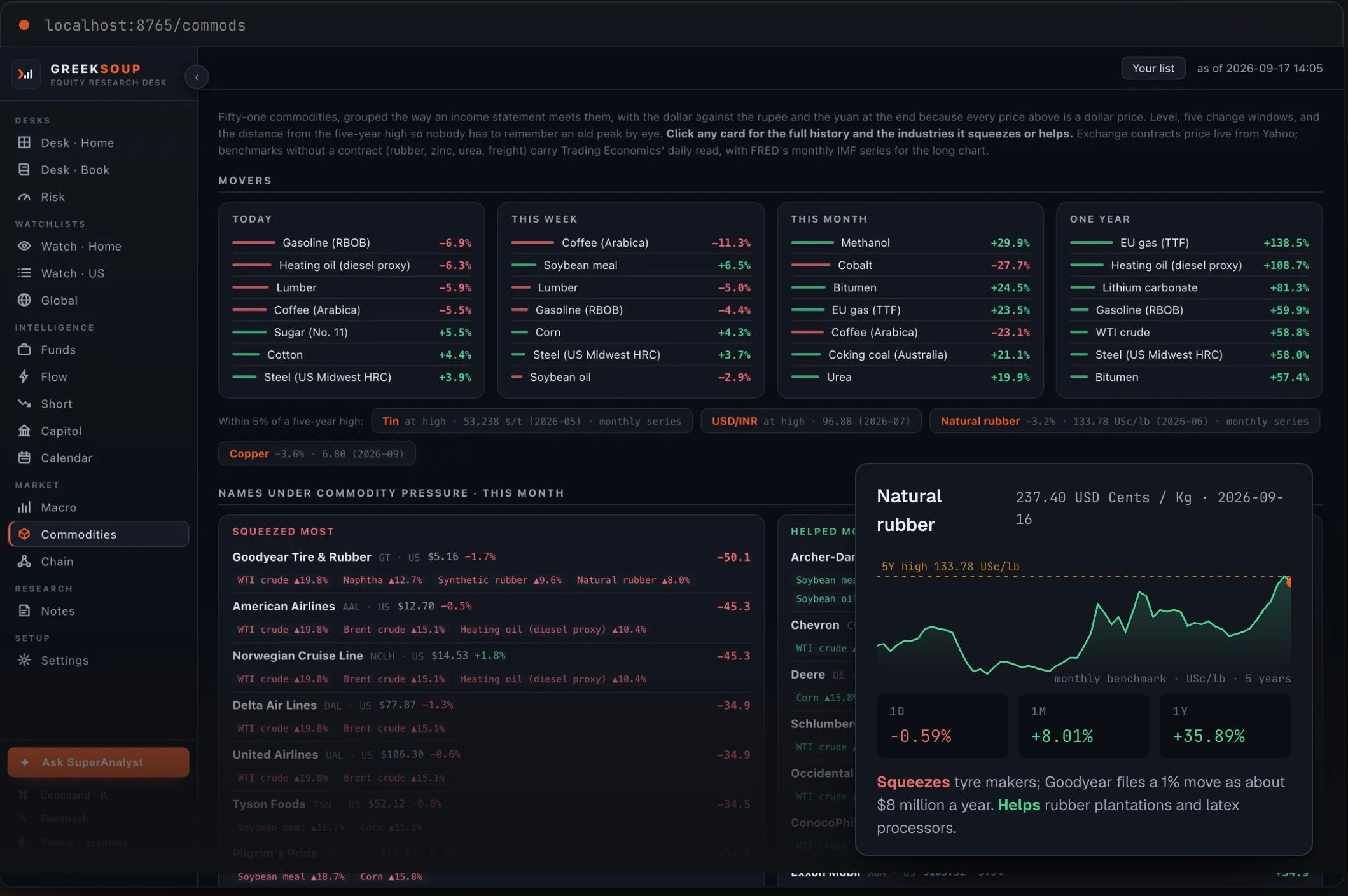
I have been travelling since the 3 September edition went out, and the feedback on the desk from that edition has been extremely positive, but the errors were piling up too, so for the last seven or eight days I have been at it ten, twelve hours a day, updating the desk, working out in my head what it should be, and trying to get my own framework, the way I actually think about a company, into that open-source desk so that it holds up on someone else’s machine and not only on mine.
This is the first Alpha with AI Letter, and it will come once a month. It carries what Alpha with AI is about, our portfolio, our experiments, our AI workflows, our experience with the various AI tools we run, and whatever little we have understood about this whole AI thing in that month, from where we sit.
We publish AI workflows for investment research, built with whichever tools are current. We have an open-source one-person equity research desk, GreekSoup. We publish research dives on global companies. We run a model portfolio, and a live one, on the back of that research. That is the whole product, and we are extremely busy doing all of it, because we are practitioners. We are not mentors, and we are not guides. The best practitioners are the best learners, and I think the best learners eventually become the best teachers, in a manner of speaking.
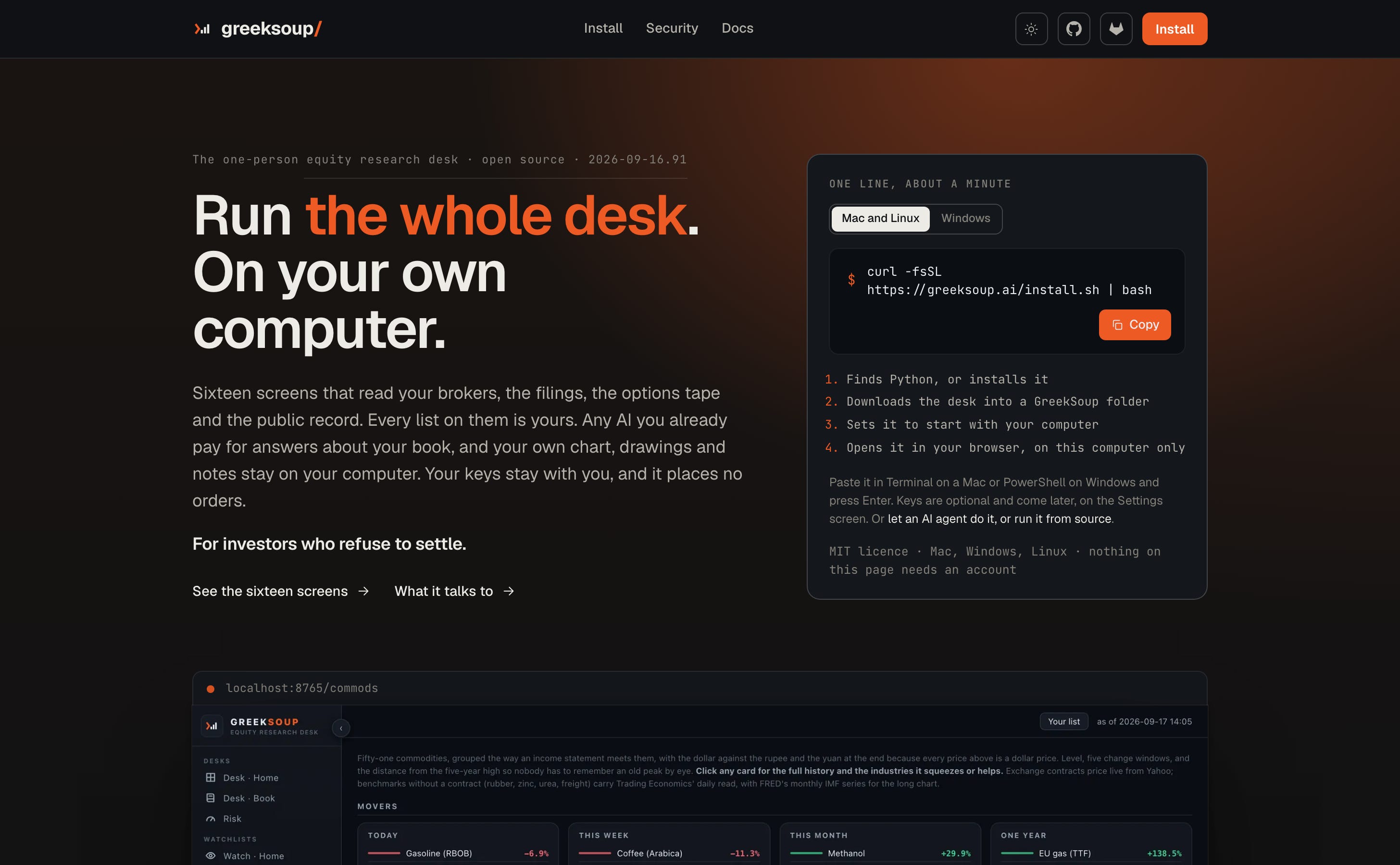
GreekSoup gets its own post, along with two deep dives, on what it is, what it represents and which mental models went into it, so I am not going through it here. If you already know it, it is at greeksoup.ai
And since this is the first letter, an offer with it. A paid subscription is the two research dives a month, every AI workflow edition, the model portfolio with a note on every add, live portfolio and this letter every month, and for the first ten people who take it through this link the price is 30 percent off forever, which means the price you pay on the day never goes up for as long as you stay.
There are ten seats at that price, and when the tenth one is taken the link stops working. Sign in to your free account first, or create one, then click the link and the price on the page is the reduced one.
The Fed hike, and my view on AI
The Fed raised rates on 16 September, a quarter point to 3.75 to 4 percent, and the vote was 12 to 0. It is the first hike since July 2023, and sixteen of the eighteen officials have another one pencilled in for this year. The ten-year is at 4.94 percent, about a point above its February low. The index closed at a record on 13 August and is about 2 percent below that now.
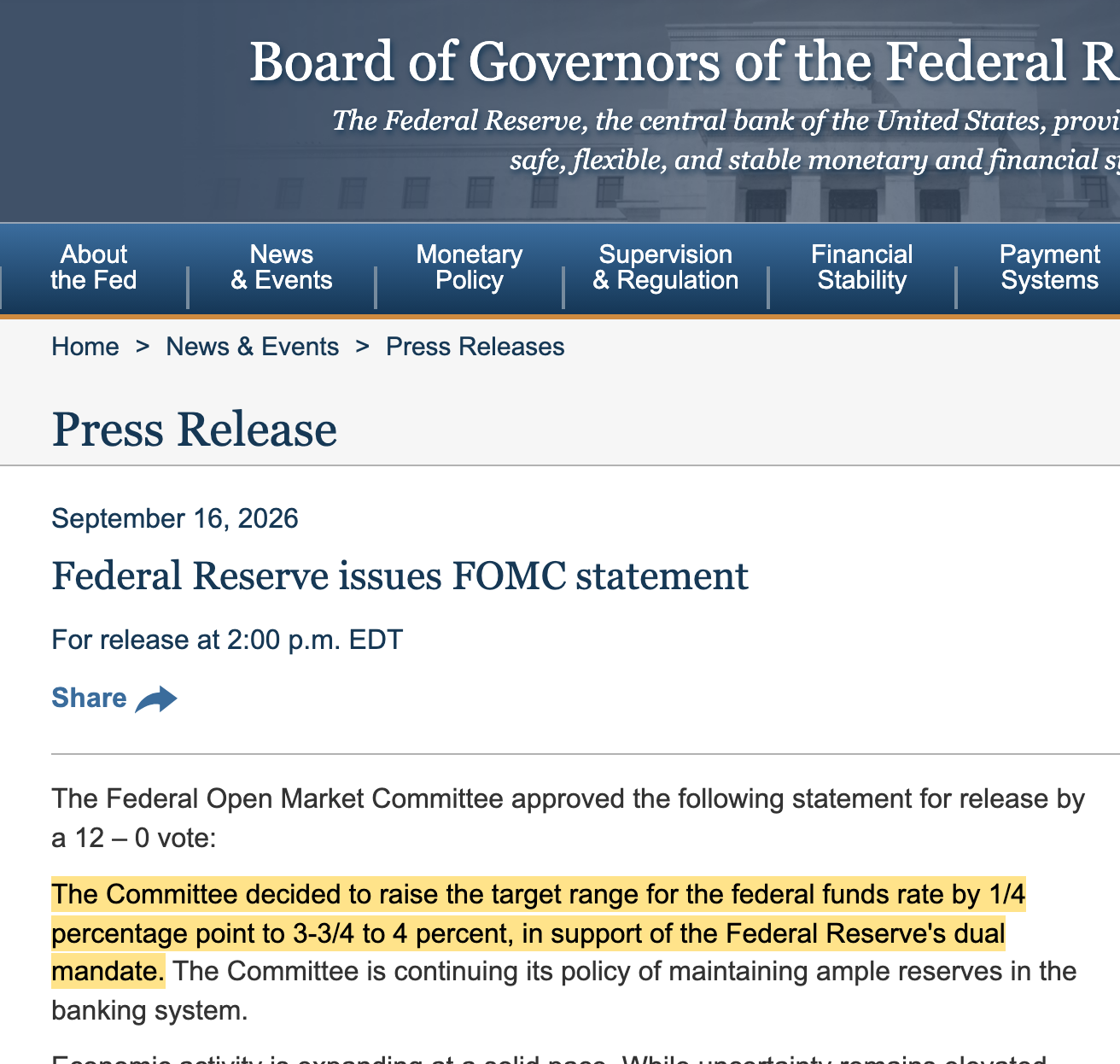
In July the market was already pricing a hike by September, and two things settled it. The new Fed chair said at Jackson Hole on 28 August that the Fed’s focus right now is prices, with its own inflation measure at 3.7 percent over twelve months, and the August jobs number on 4 September came in at 162,000 when around 53,000 was expected. So the hike was priced before it came, and the market has definitely been moving before the news all year.
For our book this means two things. 86 percent of it is in Treasury bills, and those earn a little more every time the Fed hikes. Hilton Grand Vacations sells timeshares, and two thirds of its buyers borrow from the company itself to pay for them. A hike does not change what those buyers already owe Hilton, but it raises what they pay on everything else in their life, the card, the car, the mortgage, and a buyer who is stretched is more likely to fall behind on the timeshare loan. That is why it is the position I checked first on a rate day. Everything else in the book reports in October.
On where AI is going, I have read Buffett’s shareholder letters and a lot else as well, and these are my own thoughts. Everyone has an opinion right now, and there are only two sharp ones. The first is that AI is going to kill everyone. The second is that the whole thing is hype and the models are not as capable as claimed, which is the side Michael Burry took on 14 September, when he wrote that large language models are not AI and will not become AGI. That is the beauty of it, because no one can actually predict what is going to happen. Buffett’s letters make one point again and again that fits here: an industry can change the world and still lose money for the people who invested in it, and cars and airlines were his examples. What I look for is a business with a core that stands on its own, with one or two small lines inside it that are somehow going to benefit from AI, and that is my philosophy for looking at businesses.
A small note, and the only sponsor here is me. I keep getting messages asking how I set up Claude Code for stock research, beyond what the editions can teach. So I am opening a small consulting program: I set your system up with you, then support sessions over the following months as your real problems show up. I am doing a lot of other things, so seats are very few. If that is you, the waitlist is on the website or reply to this email.
Where Accenture, Solstice, Hilton and Talabat stand
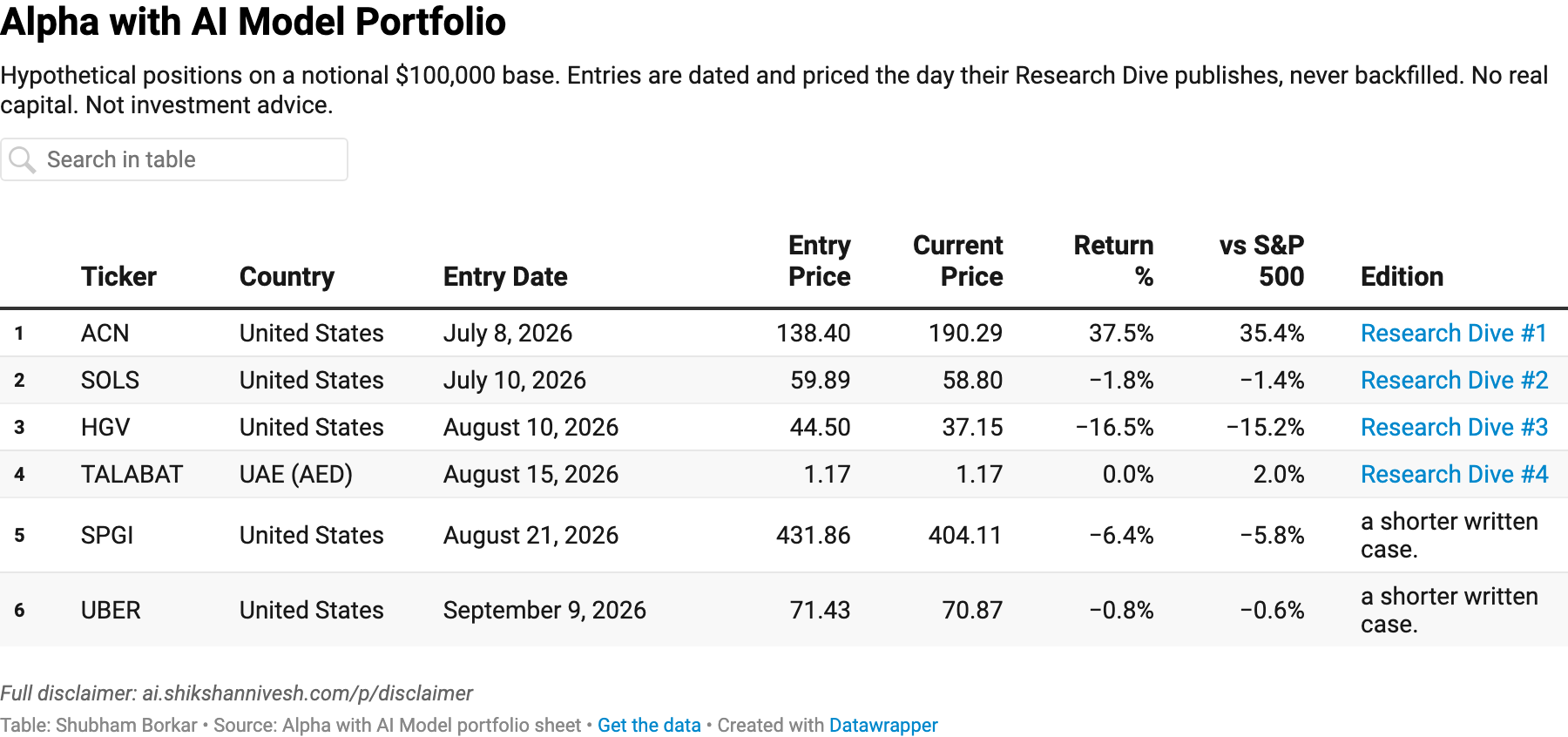
Accenture went into the book on 8 July, the day after the first dive went out, and I wrote fair value at about $178. The stock is at $190.29, up 37 percent since, past the number I wrote, and it reports its full year on 1 October. I own it personally as well.
Solstice Advanced Materials went in on 10 July. That dive asked one question, whether the refrigerant business and the uranium plant could carry the debt from a $14.5 billion acquisition of Element Solutions, and on 27 August the two companies called the acquisition off. It is held at 3 percent after two adds in August, and the numbers I hold it on now are in the last sections.
Hilton Grand Vacations is the one that has gone against me. It sells timeshares under the Hilton name and lends most of its buyers the money to pay for them, and I bought it in August because the company had retired 35 percent of its own shares while I thought the market was pricing it as if its customers were about to stop paying. It is at $37.15 today, about 16 percent below my cost, so the question I keep coming back to is what has really changed. The company has filed nothing bad since, and on 20 August it announced a new $600 million buyback. What changed is the whole group. Since 10 August the other two listed timeshare companies, Marriott Vacations and Travel + Leisure, are down 7 and 13 percent while the index is down about 1, and a rate rise lands hardest on a business whose customers borrow to buy. So the whole industry is being sold, and that could still turn out to be right, because if the customers are stretched then every timeshare company has the same problem and the market is simply early. My decision is that I am not adding more until the third quarter results in October, because the one number that settles this, whether Hilton’s loan losses are running in line with the other lenders, arrives then, and adding before it would be a guess, and I am okay with waiting.
Talabat went in on 15 August, the first dive outside the US. It runs food delivery across the Gulf with the best margins in the business, and the whole risk sat with its controlling owner, Delivery Hero, which is now being bought by Uber. It is at AED 1.15, 1.7 percent below entry, and nothing has happened to it since that changes anything.
Accenture is the best call in the book and the smallest position in it, because I bought it small and waited for the numbers to confirm the case, and the stock went up 37 percent while I was waiting. The market moves before the news most of the time, and waiting for the news costs you 10, 20, 30 percent of the move. That is the lesson from the four of them.
Three AI workflows for investment research
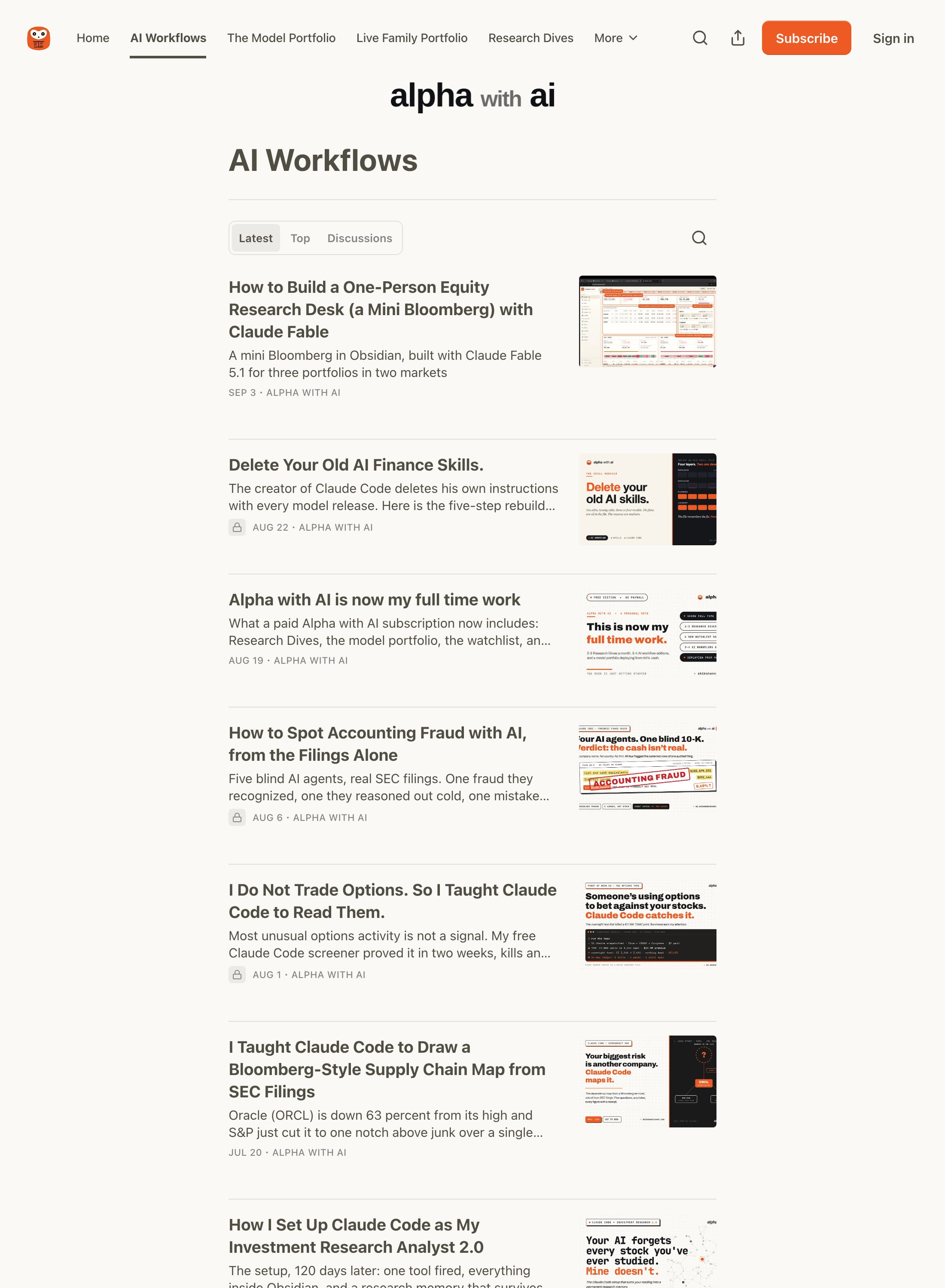
Some months I publish four or five workflows and some months one or two, and every one of them comes out of our own experimenting and running into a problem in the workflow, so the three that matter from this period are the three problems.
The first problem was whether an AI could find a fraud from the filings alone, with no name and no hint. So I stripped the company’s name and country out of the filing data and gave it to four AI agents running blind, four separate sessions with no shared memory, and asked each the same neutral question, what is the most material piece of information in these accounts. The company had $155 million of cash on its balance sheet and $292,644 of interest income for the year, and all four came back with the same answer, that the cash was probably not real, and none of them could name the company. A year after that filing the auditors resigned and the company lost its listing. That is How to spot accounting fraud with AI, from the filings alone, and the same pass now runs on every name I write about before it goes anywhere near the watchlist.
The second problem was my own skills. I opened my oldest ones and read them rule by rule, and there were rules in them I could not explain, because every one went in on some day to stop the model I had then from doing something wrong, then a better model came out and stopped doing it, but the rule stayed, and that rule has become redundant and it still exists messing the quality of your outputs and sometimes even confusing model’s decisions. Delete your old AI finance skills is the five-step rebuild I now run at every big model release after every few months, without losing the years of work that I have put in those skills.
The third problem was the tab stack, six or seven browser tabs of screeners, insider feeds, 13F trackers and macro data that do not really talk to each other, so you are the one doing the talking, carrying a margin number from the screener to the filing to your notes to the alert, ten, twenty times a day everyday as an active investor. How to build a one-person equity research desk is the whole desk, twelve tabs inside Obsidian, every one of them a file on my machine, with how each tab got built, published open source on 3 September, and it is the piece that inspired the desk (greeksoup) from the top of this letter.
Why I bought S&P Global and Uber
Two companies came into the model portfolio without a dive, S&P Global on 21 August and Uber on 9 September, each on a short note of five or six lines in the subscriber thread on the day, and a note that short says what I did and not why, so this is the why.
S&P Global is five businesses, and I think two of them matter the most.
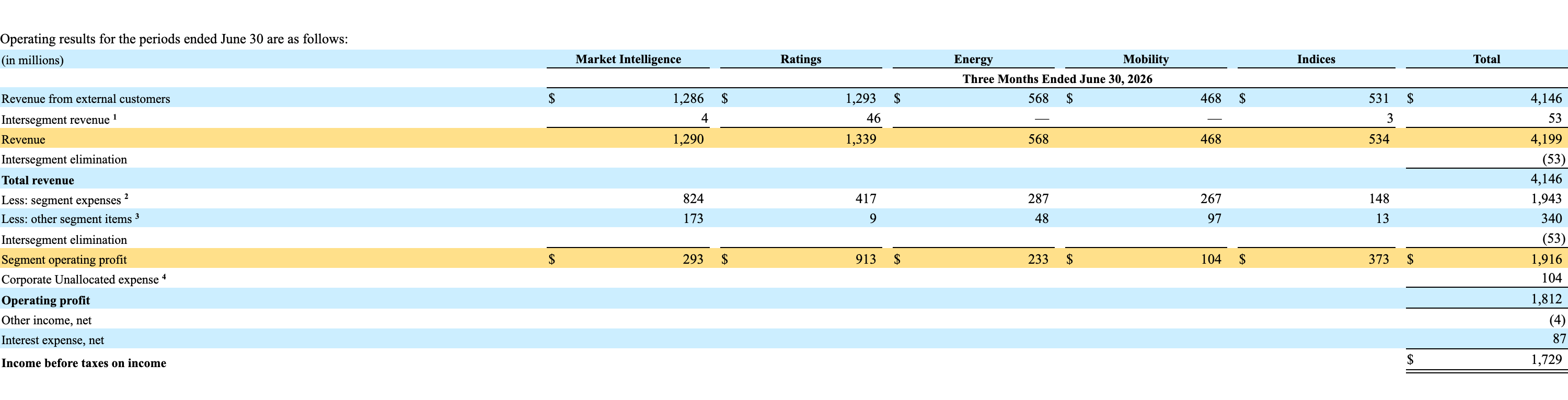
The ratings business puts a credit rating on debt. A company that wants to borrow in the public bond market needs a rating from S&P or Moody’s, because most of the big buyers of bonds will not hold unrated ones, so the borrower pays for the rating and cannot skip it. The index business owns the S&P 500 and the other S&P indexes and licenses them, so every fund that tracks one pays S&P a small yearly fee on the money in the fund, and at the end of June the funds tracking S&P’s indexes held $6.35 trillion, up 34 percent in a year. S&P earns a fee on that money, and the fee is what makes the index business $534 million of revenue a quarter at a 70 percent operating margin. In the June quarter the ratings business made $913 million of operating profit on $1.34 billion of revenue, a 68 percent margin and up 28 percent on the same quarter last year, and the index business made $373 million on $534 million, a 70 percent margin and up 21 percent, and between them those two made two thirds of every dollar of segment profit in the company.
The whole company did $4.1 billion of revenue in the quarter and $1.8 billion of operating profit, a 44 percent margin, and in the first six months of the year it made $2.2 billion of free cash and gave almost all of it back to shareholders, $1.5 billion in buybacks and $575 million in dividends. What the market sold in August is the third business, Market Intelligence, which sells data and analytics to banks and asset managers, does $1.29 billion of revenue a quarter at a 23 percent margin, against 68 for ratings and 70 for the index business, and is the one AI could actually hurt. That fear is real and it fits one business out of five, but market has applied discount to all five. There is one more line in the filing. Every data centre going up right now is paid for with borrowed money, borrowed money gets rated, and the fee S&P earns on new debt, its transaction revenue, grew 25 percent in the quarter, so S&P gets paid by the AI build without being an AI company, and if the build slows down it carries on rating everything else that borrows. I bought it on 21 August at $431.86 and it is at $404.11 today, another 6 percent lower, with nothing filed by the company since, so either the market knows something that is not in a filing yet or the same business is now cheaper, and the third quarter results in late October will most probably say which.
I will be wrong if bond issuance rolls over, or if the company guides the ratings and index businesses lower.
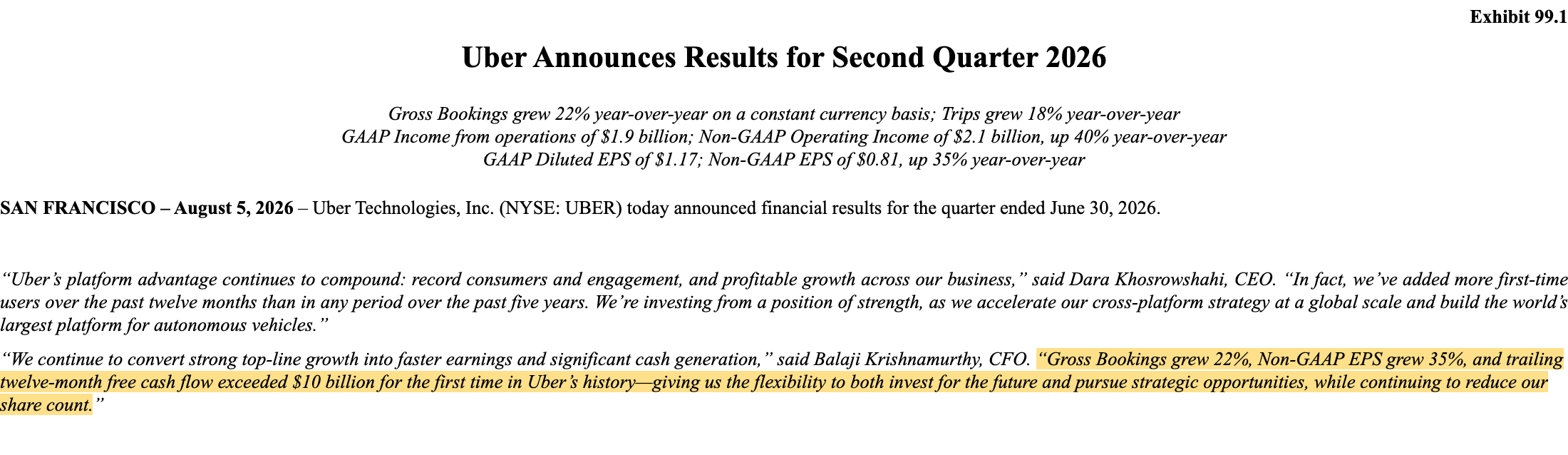
Uber I got to through the Talabat research. Delivery Hero owns 80 percent of Talabat and Uber is buying Delivery Hero, and after a month on the company underneath I came out more interested in the one on top. In the June quarter people took 3.9 billion trips on Uber, up 18 percent, 208 million people used it in a month, and the rides and deliveries added up to $58 billion of gross bookings, up 24 percent, of which Uber kept $14.2 billion as its own revenue, up 12 percent. Operating profit was $1.9 billion in the quarter, up 30 percent, and free cash flow was $2.8 billion, which took the trailing twelve months above $10 billion for the first time. It spends about $70 million a quarter on property and equipment, because it owns almost no cars, and a business that makes $10 billion a year of cash on that little spending is what I am buying.
In three weeks this summer Uber committed to a 14.2 billion euro bridge loan to buy Delivery Hero and to more than 10 billion dollars of robotaxi partnerships, and the market took the multiple down, because a business that used to own almost no cars is now buying them, and the shares sit near 16 times earnings, about 30 percent below last September’s high. On 15 September Uber sold 4.5 billion euros of bonds in five pieces, due between 2029 and 2046, at 3.75 to 5.25 percent, which turns the first part of that bridge into long-term debt that the cash flow covers. I bought it on 9 September at $71.43 and it is at $70.87. I now own both the controller and the controlled minority, and the bull case I published on Talabat runs through Uber integrating it well while the bear case runs through the owner squeezing the minority, so one of the two positions is on the wrong side of whichever way it goes, and I knew that when I bought it. The Delivery Hero offer has to clear its acceptance on 5 November. If free cash flow has stopped growing at the February results while the robotaxi commitment has gone above 10 billion again, then I will be wrong.
What Claude, ChatGPT, Grok and Kimi cost me
Claude Max is $100 a month, down from the $200 plan I was on, and Claude Fable 5.1 through Claude Code does most of my work. ChatGPT is $20 a month on Plus and I am increasing it to the $100 Pro plan, which gives five times the usage of Plus, because I want to run Codex on my notes for a month or two and see which of the two I use more. I will tell you in the October letter. SuperGrok is about $29 a month. I use it when a Claude session dies in the middle of a task, and I use it because Grok reads X live, and X is where most of the seasoned investors I follow post. Kimi is on the $39 plan that carries Kimi Code, and I am cancelling it this month. That is $188 a month today and $229 after the two changes.
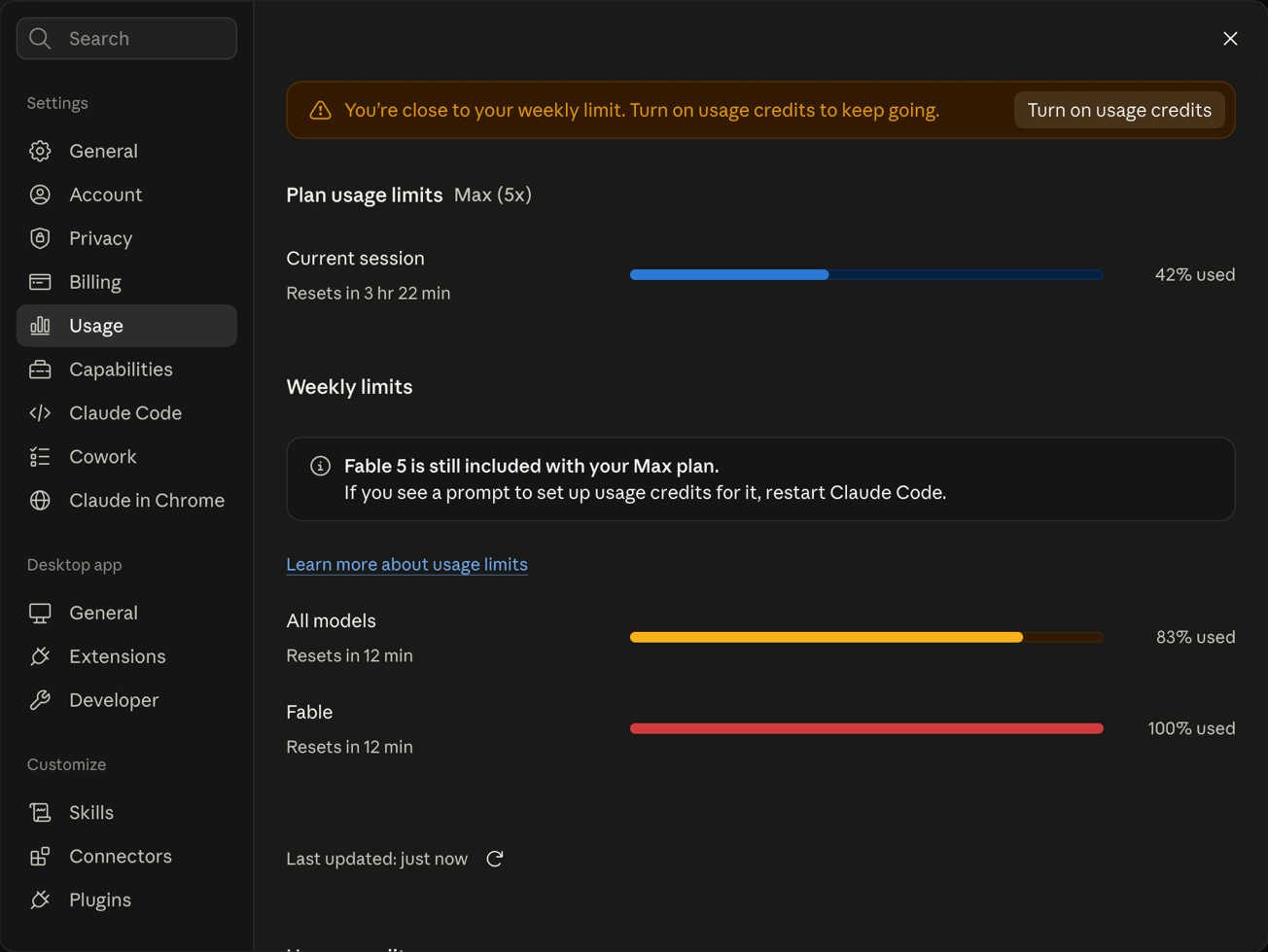
I am not just an investor. I create content, I research and I experiment a lot, and for that these plans are necessary, because I use 80 to 90 percent of every one of them, which is heavy use, and some of it is content work, like the open-source desk, and I am always working, and that is the reasoning behind so many different plans. Just because I use all of them does not make all of them necessary for you, and for investing work alone I do not think everything is necessary, a Claude $100 plan or a ChatGPT plan is enough on its own, so choose a plan according to your own usage.
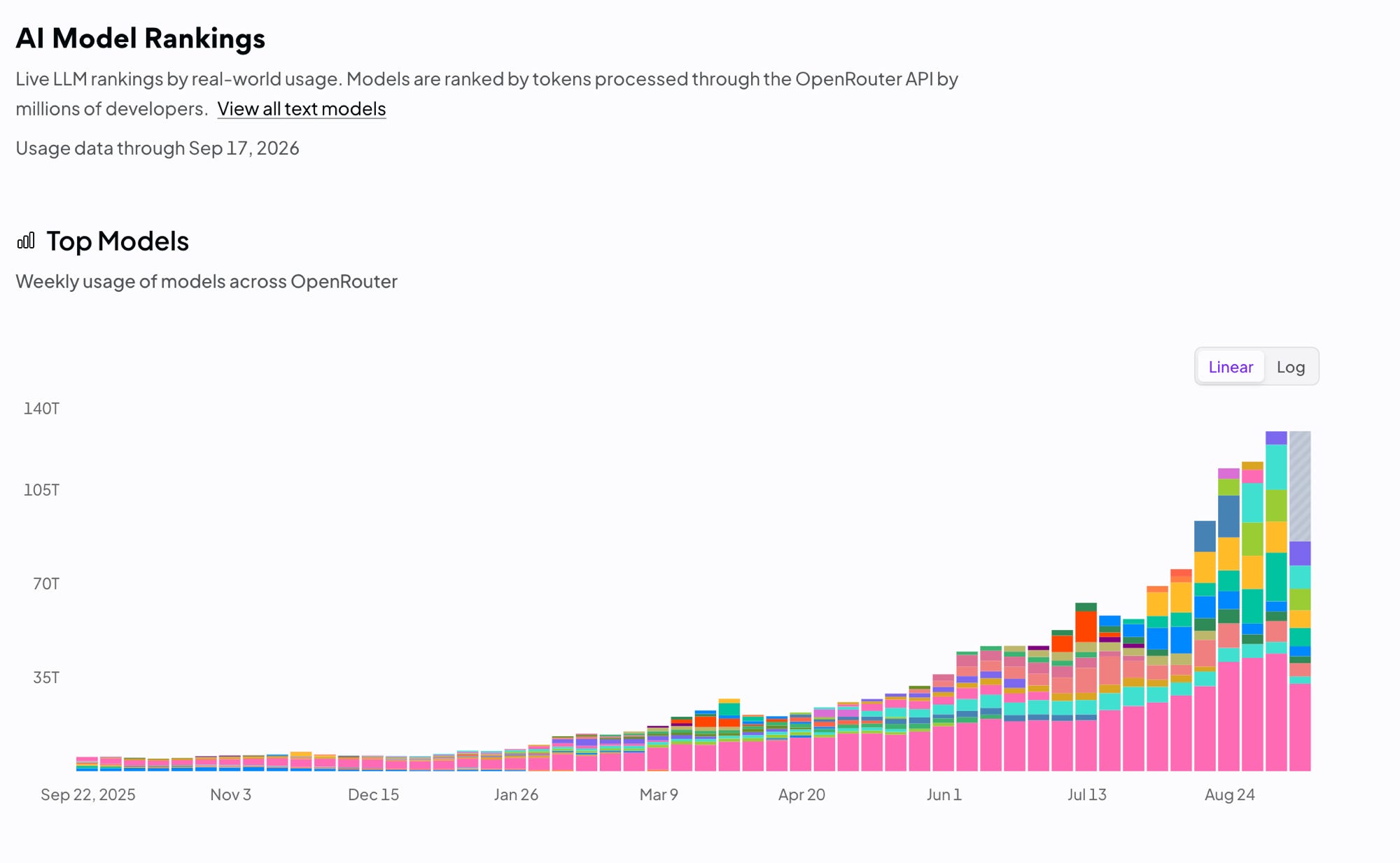
OpenRouter is where developers pay for models from every lab through one key. The tokens going through it every week, tokens being the unit the labs bill in, went from under 10 trillion in September last year to more than 100 trillion this month, and that is almost crazy.
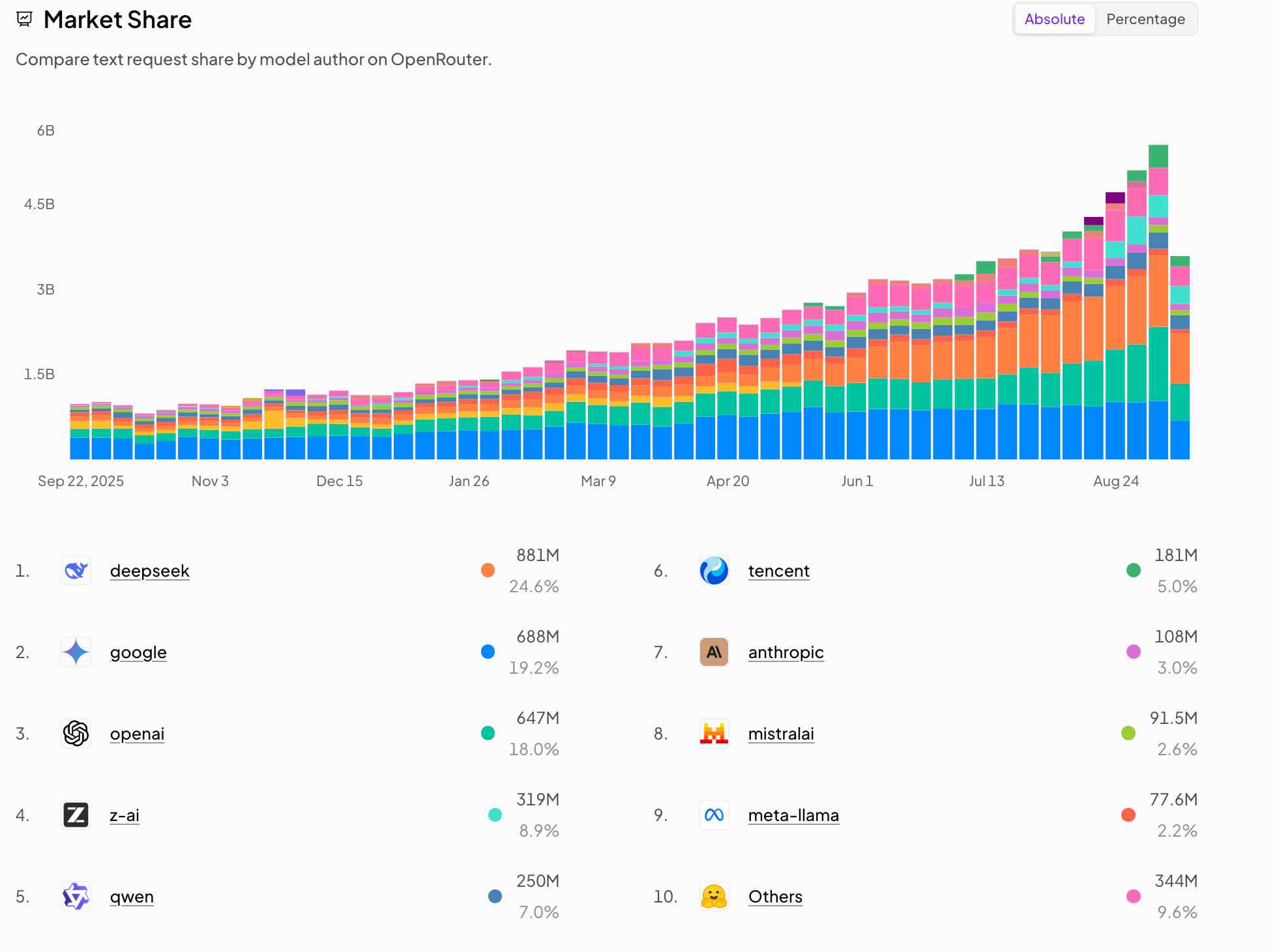
The second chart is who the requests go to, by lab, in the latest week. DeepSeek has 24.6 percent, Google 19.2, OpenAI 18.0, Z.ai 8.9, Qwen 7.0 and Tencent 5.0, and Anthropic, whose model I pay the most for, has 3.0 percent, and that is pretty crazy as well.
The third chart is OpenRouter’s benchmark list, which scores each model on an independent index that combines several tests, and Claude Fable 5.1 and Qwen3.8 Max share first place at 53.4, with GPT-6 Astra at 52.8 behind them.
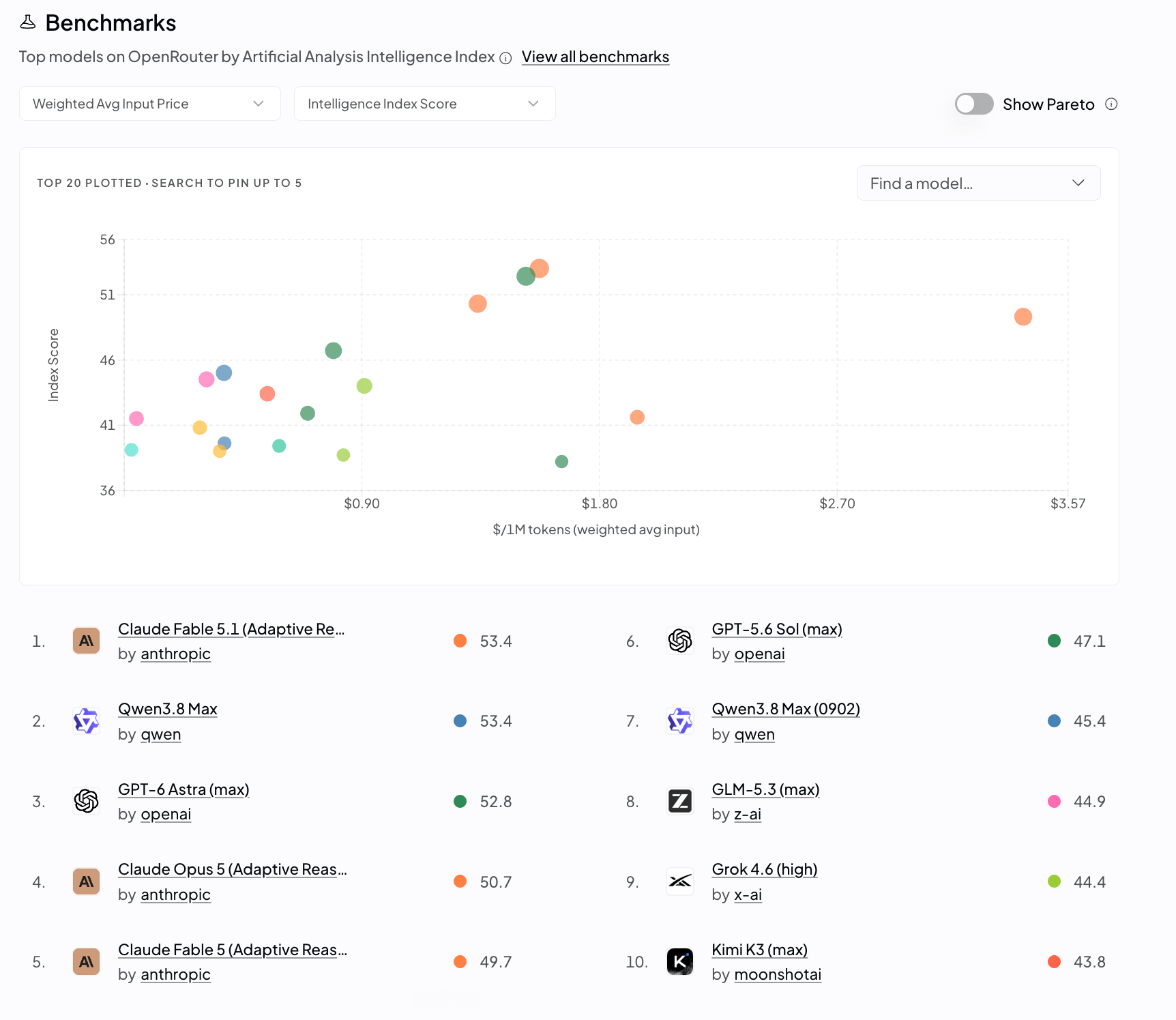
I am putting these three charts here from the market side as well. Every token in the first chart was computed on a chip in a data centre, with the model held in memory while it worked and power drawn the whole time, so the number of tokens tells you what all of this is going to cost, in chips, in memory, in data centres, in so many different things, and the pace tells you how fast that bill is growing, more than ten times in a year on this one service alone. The second chart says most of that growth is going to the cheap models, so the price of a token is falling while the number of tokens is rising, and the labs at the top of the benchmark are not the labs getting the volume. This is not like any other industry. The scale is crazy on so many levels, and it is only going to go up from here, and that is the one thing to take from these charts.
What Solstice is worth without the deal
In July I valued Solstice as a company that was about to borrow about $5 billion to buy Element Solutions, and the base case of $77 and the bear case of $35 in that dive both assumed that debt. The deal was called off on 27 August, so on 9 September I struck both numbers, because they were about a company with $5 billion of debt and this company carries about a quarter of that. At 30 June Solstice had $750 million of cash and $1.2 billion of net debt, which is about 1.2 times the profit it has guided to for this year before interest, tax and depreciation. It raised that guidance on 30 July and kept it on 27 August, and the same evening the board approved a $500 million buyback, the company’s first. On 17 September I re-ran the valuation for Solstice on its own, two years out, with the buyback in the cash math and General Atomics’ half of the uranium plant taken out, and on my numbers the base case is about $86, the bear case about $47 and the bull case about $115, against $58.80 at the 17 September close. The bear case is now 20 percent below the price where the old one was 40 percent below, and the difference is the debt, because with $5 billion of lenders ahead of the shareholders a 20 percent miss on the business took 40 percent off the shares, and with the debt it has now a 20 percent miss on the business is about a 20 percent miss on the shares. The whole company, debt included, is valued at about ten times this year’s guided profit, and it has beaten and raised in both of the quarters it has reported. The third quarter results in late October answer the two questions I have, whether the refrigerant margin comes back to the mid-thirties as the company guided and whether the buyback has begun, and if either answer is no then the position has failed a test and I will say so here. Until then I am holding it.
What I am watching until the October letter
Accenture reports its full year on 1 October. Solstice, Hilton Grand Vacations and S&P Global report their third quarters in late October, and those results answer the questions I have on each of them, the refrigerant margin at Solstice, the loan losses at Hilton and bond issuance at S&P Global. Uber’s offer for Delivery Hero has to reach its acceptance level by 5 November. The Fed meets on 27 and 28 October, and most of the committee has another hike pencilled in. In the October letter I will tell you which of Claude Code and Codex I used more, and the next research dive comes before the end of this month. Next month the book will look different, the desk will look different, and you will read both here.
If this letter was worth your time, a like on Substack helps more readers find it, a share sends it to one more investor, and a reply tells us what to put in the October one.
*Disclaimer: Alpha with AI covers US-listed and other global securities for educational and research purposes only. Nothing here is investment, legal, or tax advice. The workflow and its outputs read public filings, investor calendars, and news sources; outputs can contain errors and are observations of past filings, not predictions or recommendations. AI tools, including Claude Code, were used in the research and drafting of this edition. Always verify against primary sources and consult a qualified professional before making investment decisions.*
Written by Shubham Borkar
Financial Clarity. Insightful Ideas.