


I have taken losses in the market that stung for weeks.
The worst ones were the micro-cap bets. Extremely risky, and I knew it going in, and I took them anyway. When they broke, they broke hard. Sixty, seventy, eighty percent down, and I did what everyone does at those levels. I hoped.
It will come back. It always comes back. Look at the chart. One good quarter and I am whole again.
That voice is not analysis. It is anesthesia.
Some of those positions are still sitting in my portfolio today. I never sold them. I keep them there on purpose, red rows on the screen, reminders of the one lesson that took me years and real money to learn: taking a loss is not weakness. Accepting the fate of a position and booking the loss is the most courageous thing you can do in this business.
Those losses stung for three weeks. Four. Five. A couple of months, some of them. Then they faded. Today I could not tell you the exact numbers without opening my old statements.
This week I learned what a loss that does not fade feels like.
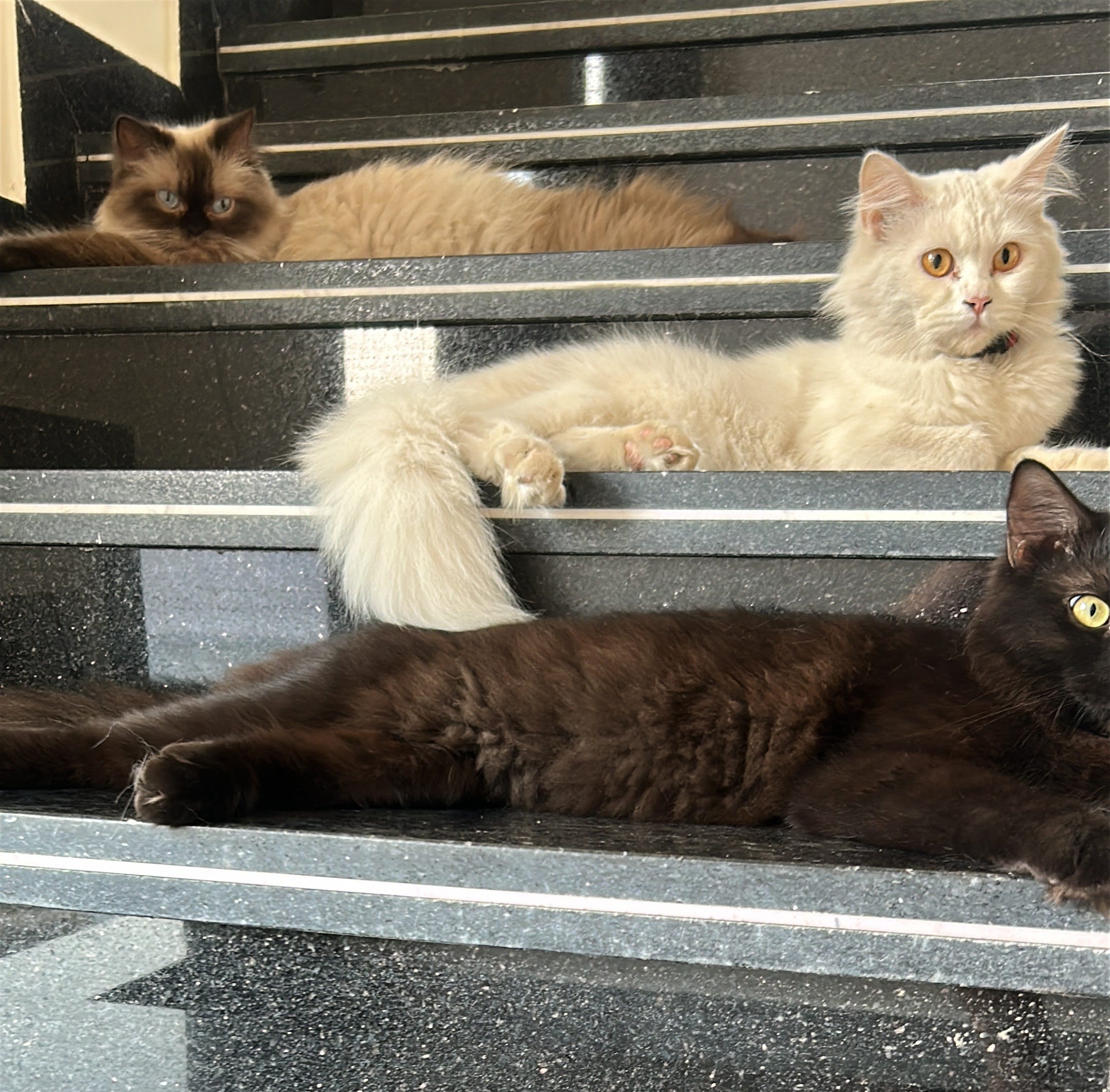
My cat Foxy died. She was two and a half years old. She showed me sides of myself I did not know existed, the good ones and the bad ones, things no market cycle ever surfaced in me. I will never forget her, and I do not think this one will ever fade. I am not going to compare her to stocks. There is no comparison. Nothing I have ever lost in the market comes close, and I want that sentence to stand on its own.
But loss clarifies. Sitting with it this week, I noticed that the regrets after any loss are always the same list. Maybe I should have done more. Maybe I should have been more careful. Maybe I should have never taken this risk. The list never changes. What changes is what you do while a loss is still open.
In the market, while a loss is open, you have exactly two options. You can hope. Or you can go read the documents and let them tell you what you actually own.
The market is running the hoping loop on one stock right now, at full volume.
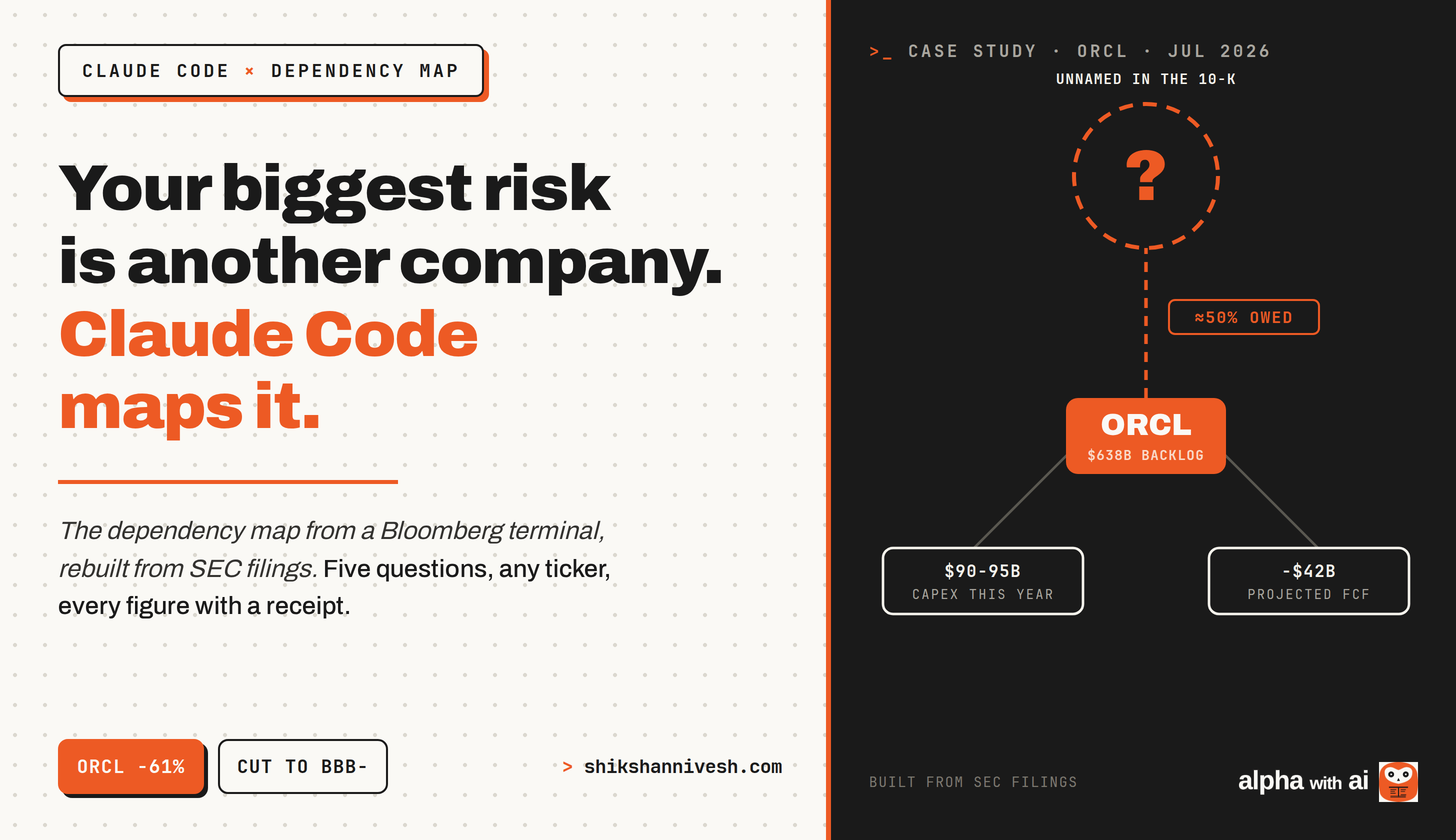
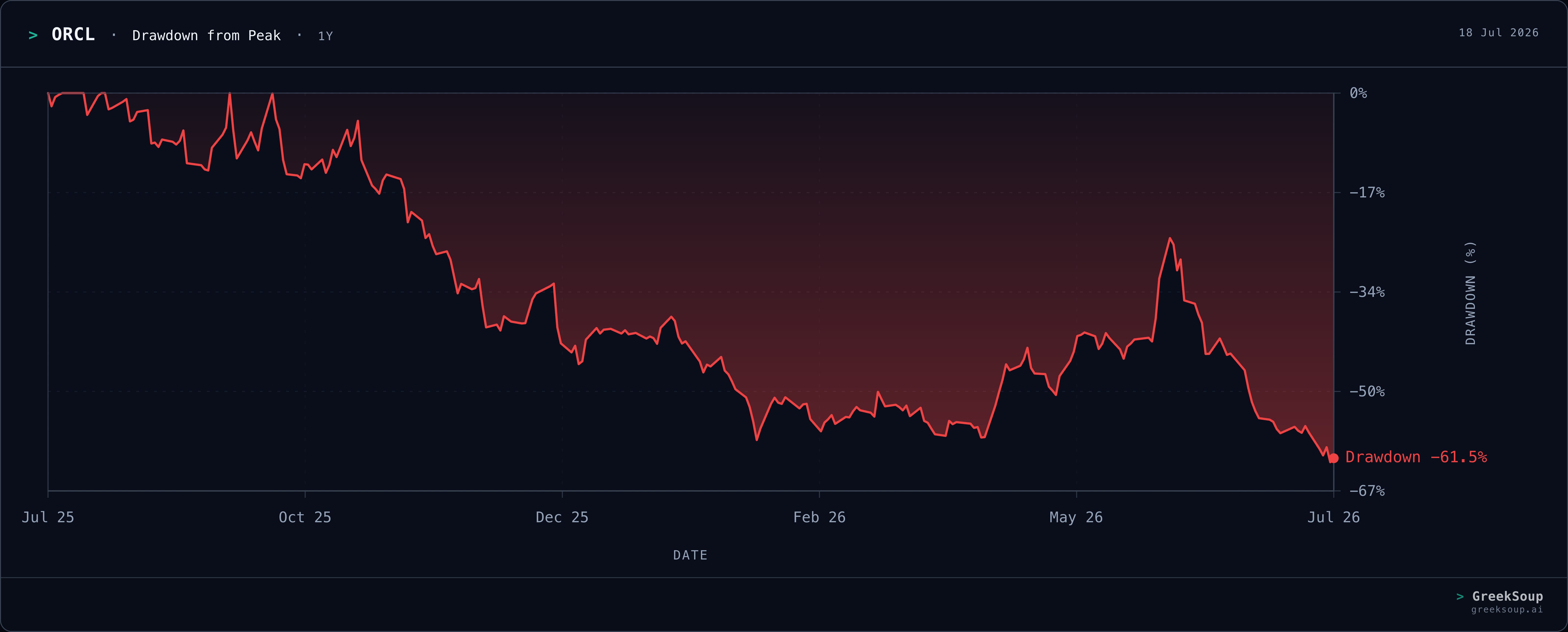
On July 9, S&P cut Oracle to BBB-. One notch above junk. Oracle. The boring database company that sits in retirement accounts because nothing ever happens to it. The stock is down more than 60 percent from its peak, and everyone still holding it is running the loop I know by heart. It will come back. It always comes back.
Maybe it will. But hope is not a process.
Oracle filed its annual report on June 22, seventeen days before the downgrade. It contains $638 billion of contracted future revenue. A year ago that number was $138 billion. Half a trillion dollars of new promises in twelve months.
So I did the only thing I trust when everyone is shouting. I pointed Claude Code at the fresh filing and had it search every page, every exhibit, for the name of the customer behind roughly half of that number.
Zero results.
Quick context before we go in. I build the AI research workflows I wish I’d had on the equity desk, then show you exactly how they run on real companies. Free to join ~5,000 investors reading along. Subscribe and the next one lands in your inbox.*
Everyone Is Arguing About Oracle. Almost Nobody Has Opened the Filing.
Here is what this week sounded like if you hold Oracle.
Start with the downgrade itself. S&P’s reasons for the cut, in plain words: Oracle plans to spend $90 to $95 billion on data centers this fiscal year, its free cash flow is projected at negative $42 billion, and roughly half of its giant backlog depends on a single customer. One detail most of the takes skipped: the outlook S&P attached to the new rating is stable, not negative. Read both halves of that. The agency is worried enough to cut, and not worried enough to signal the next cut.
The stock made a new 52-week low at $123.66 on Thursday. From its September peak, it has lost more than 60 percent.
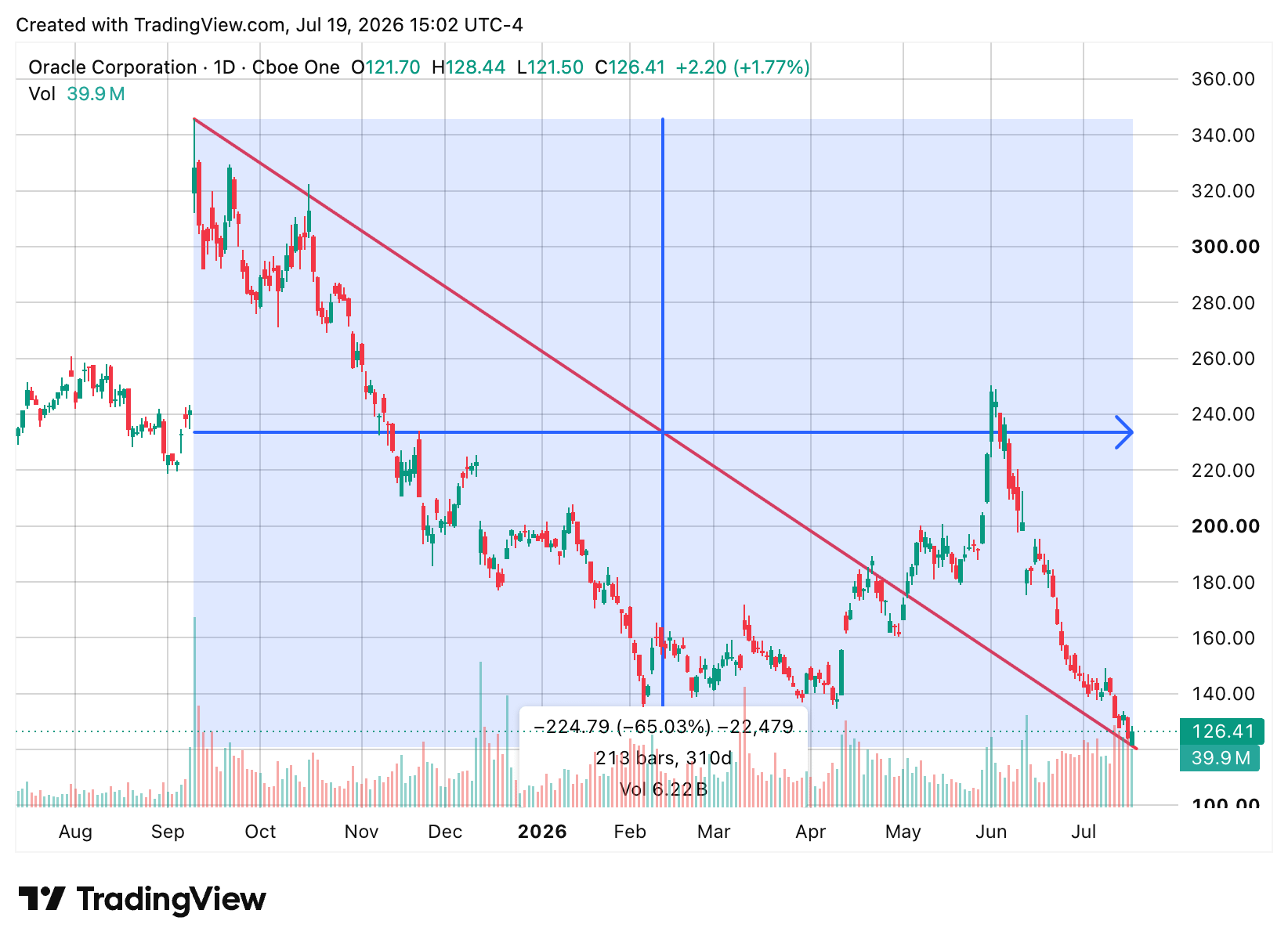
And the market cannot agree on what any of it means. The same week the downgrade landed, one Wall Street firm published a note arguing the stock triples from here. Bears are calling Oracle the first domino of the AI buildout. Both sides post charts. Both sides sound certain.
They are not just posting, either. They are betting. On Polymarket there is a live market on the question underneath every Oracle take, whether the AI bubble bursts, and real money moves its odds all day.
Watch the odds tick for a minute. Then notice what they are made of. Every tick is opinion, priced in real time. Not one of them is a new fact about Oracle. The facts are sitting where they were filed, largely unread.
Scroll through the takes and you will notice something.
Almost every argument, bull or bear, is built from the same three ingredients. The downgrade headline. The stock chart. And a number Oracle announced on an earnings call. Almost nobody quotes the document underneath all of it.
Oracle filed its FY2026 annual report on June 22. Seventeen days before the downgrade. It is the most information-dense thing the company has published all year, and it answers on the record, under liability, with numbers someone signed.
Not every question. Filings never answer every question. And this one refuses to answer the biggest question you can ask of it: who, by name, is behind the $638 billion? Hold that question. It is the entire second half of this piece.
So that is where I went. Not to form an opinion first. To build a map.
Who supplies Oracle. Who buys from Oracle. How much hangs on whom. The questions you would ask about any business whose price just got cut by more than half.
It turns out there are exactly five of those questions. And they work on any company with a filing.
Five Questions. The Company Is Just the Parameter.
Here is the whole framework in one breath. Five questions, in a fixed order, and the order is the discipline. Each question becomes one prompt that forbids the machine from guessing. The company is just the parameter.
Who does it depend on to build? Dependence hides on the balance sheet, not in the supplier list.
Who does it depend on to get paid? Future revenue is a promise, and someone specific made it.
What is the receipt behind every name? Disclosed, on the record, reported, or NOT DISCLOSED. Never an estimate dressed as data.
Who appears on both sides? When your supplier is also your customer, the demand signal needs a second look.
What can the map not show? Last on purpose. The silences are the risk list.
Build side first, because that is where disclosure is forced. Paid side second, because that is where it thins. Receipts before meaning. Both sides only after both maps exist. And the gaps last, always last, because the gaps are the finding.
What the five questions produce is a picture professionals will recognize. Bloomberg terminals call it SPLC: the company in the center, suppliers on one side, customers on the other, the dependencies quantified. That shape is the right shape. The framework is not mine and it is not new. What is new is that you can build it yourself from the primary record, and hold every box on it to a receipt.
If you have never set Claude Code up for this kind of work, the whole install is in How I Set Up Claude Code as My Investment Research Analyst. Start there. One caution that never changes: give it a folder with the filing inside, not your whole vault, and let it work in that sandbox.
Now the run. Oracle, the loudest stock in the market, fresh 10-K on the table.
STEP ONE: WHO DOES IT DEPEND ON TO BUILD?
The principle: dependence hides on the balance sheet. A supplier list tells you who a company shops with today. The commitments, the leases it has signed but not started paying, the power it has promised to buy, the borrowings of other companies it has guaranteed, tell you who it is chained to for the next twenty years.
The prompt I gave the tool:
read Oracle's FY2026 10-K in this folder. I want the build side of its dependency map. from the filing only: every supplier dependence it discloses, chips, manufacturing, data center capacity, power, and the commitments that lock those dependencies in: leases signed but not yet commenced, unconditional purchase obligations, guarantees of anyone else's borrowings, and the financing raised for the buildout. exact quote and section for every item, accession number on the file. if a counterparty is not named, write NOT DISCLOSED, do not guess who it is. save it as a markdown file, then re-read every cited section from scratch and flag anything that does not reconcile.What it returned:
The build side is enormous, and almost nobody in it has a name.

Chips: the filing discloses dependence on "AI accelerators, including graphics
processing units" and admits Oracle "at times [has] to accept less favorable
terms with suppliers to minimize supply constraints." Supplier names: NOT
DISCLOSED. Zero occurrences of any chipmaker's name in the document.

Data centers: $260 billion of lease commitments that are signed but have not
even commenced, expected to start between fiscal 2027 and 2029, with terms of
fifteen to nineteen years. That sits on top of $30.2 billion of lease
liabilities already on the balance sheet, up from $13.4 billion a year ago.
Landlord names: NOT DISCLOSED.

Power: $13.3 billion of unconditional purchase obligations, "primarily related
to data center power arrangements." Counterparties: NOT DISCLOSED.

Signed after the year closed: another $19 billion of purchase commitments for
cloud infrastructure, five-year term. And one guarantee: Oracle has guaranteed
up to $3.3 billion of a data center landlord's borrowing, which matures in
September 2026. The landlord: NOT DISCLOSED.

The money behind it: capital expenditures went from $21.2 billion to $55.7
billion in one year, and the company issued $43 billion of senior notes in
fourteen tranches, with maturities running out to February 2066.

One sentence flagged from the risk factors, because it ties the whole side
together: the lease terms "typically do not align with the duration and pricing
of customer contracts."
Read that back slowly, because the shape of it is the finding. The filing is precise about the sizes. A quarter of a trillion dollars of leases that have not started. Forty-year money funding them. And it is silent, almost completely, about the names. On the build side of the map, the amounts are disclosed and the counterparties are not.
Hold that asymmetry. The paid side, next, repeats it at a scale that is hard to believe. And then, in a place nobody thinks to look, it flips.
The question I am actually asking: what has this company already committed to build, for how long, and who holds those commitments? The filing answers the first two in billions, and goes quiet on the third.
STEP TWO: WHO DOES IT DEPEND ON TO GET PAID?
The principle: future revenue is a promise, and someone specific made it. A backlog is not money. It is a list of counterparties who have agreed to pay, and the only thing that makes the number worth anything is who is on the list. So the second question walks to the other side of the map and asks the filing to name the promise-makers.
This is also where the question I asked you to hold at the top of this piece stops being rhetorical.
The prompt I gave the tool:
same filing, other direction. who does Oracle depend on to get paid? from the 10-K only: total remaining performance obligations and the prior year number, how fast the book converts to revenue, every customer concentration disclosure including the 10 percent revenue test, any admission of being concentrated among large customers, and every customer name that appears anywhere in the document. exact quotes and sections, accession number on the file. where the filing is silent, write NOT DISCLOSED. save as markdown, then re-read every cited section from scratch and flag anything that does not reconcile.What it returned:
The book: remaining performance obligations of $638 billion, against $138
billion a year earlier. Multiplied by 4.6 in twelve months. The filing's entire
explanation for half a trillion dollars of new promises is one clause: "certain
significant cloud contracts that were entered into during the period."

The speed: about 12 percent expected to become revenue in the next twelve
months, roughly $77 billion. Then 34 percent between months 13 and 36, and 34
percent between months 37 and 60. A year from now, nearly ninety percent of the
book will still be a promise. And the book is not even complete: the filing
elects a permitted exemption that leaves certain consumption-based amounts out
of the $638 billion entirely.

The tests: the 10 percent customer revenue test comes back clean, all three
years. And one risk factor later, the filing concedes concentration among a
number of large customers anyway. Both sentences pulled verbatim.

The split of the $638 billion by customer: NOT DISCLOSED. Nothing anywhere in
the document quantifies any counterparty's share.

The names: zero. A full-text pass of the document and every exhibit returns no
customer name at all. The names behind the biggest number in the filing do not appear in the document that printed it.
Here are those two sentences, and I want you to read them the way they sit in the document, a few pages apart, saying opposite things.
Oracle’s filing states, on the record: “No single customer accounted for 10% or more of our total revenues in fiscal 2026, 2025 or 2024.”
That sentence is true. And it is useless. Both at once, and seeing why is the lesson of this whole step, because it transfers to every company you will ever read.
The 10 percent customer test looks backward, at revenue. Oracle’s FY2026 revenue was $67.4 billion, and the test patrols that number, the money already recognized. But the risk is not sitting in last year’s revenue. It is sitting in the $638 billion of promises, a book nearly ten times the size of revenue, and in that book there is no naming rule at all. The only figure anyone has put on what hides there is S&P’s, from the downgrade note: roughly half of the book depends on a single customer. Not half of a quarter’s revenue. Half of the book of promised future revenue, resting on one counterparty, and the institution willing to write that down is a rating agency, not the company.
And the filing itself concedes the gap, one risk factor later: “In certain OCI offerings, we are more concentrated among a number of large customers, which could increase these risks.”
Read those two sentences together. The first is what the disclosure rule forces. The second is what the risk actually looks like.
The revenue test cannot see a risk that has not become revenue yet.
By the time any of these customers is large enough in recognized revenue for the rule to force a name into the filing, the dependence will already have been sitting in the leases, the debt, and the data centers for years. That is the disclosure gap. Once you see it, you cannot stop seeing it.
Step One gave us amounts without names. Step Two gives us the biggest amount of all, and not one name. But a company speaks in more places than its annual report, and what it says elsewhere turns out to be the strangest part of this whole map.
That is Step Three.
The question I am actually asking: who made the promises this company is priced on? The filing’s entire answer is one clause. Certain significant cloud contracts.
STEP THREE: WHAT IS THE RECEIPT BEHIND EVERY NAME?
The principle: an estimate dressed as data is worse than a gap. A gap tells you where the record ends. An estimate hides that the record ended. So before any name goes on the map, it gets a receipt, and the receipt has exactly four grades. DISCLOSED, in a filing, with the quote and the accession number. ON RECORD, said by the company anywhere it speaks: earnings releases, calls, its own press page, offering documents. REPORTED, said only by the press, with the outlet named. Or NOT DISCLOSED, and the map says so instead of guessing.
The annual report went quiet on names. But a company speaks in more places than its annual report, and every one of those places is searchable.
The prompt I gave the tool:
now build the receipts ledger for every dependency from the last two steps. for each counterparty and each direction: is the relationship, and its size, disclosed in a filing, on the record from the company anywhere, earnings releases, calls, its own press releases, offering documents, or only reported in the press, and by whom. search Oracle's entire SEC filing history in the full-text index, and search the spelling variants of every name, not just the clean spelling. one line per name per direction, the strongest source, dated. never estimate a number, never average press reports. if nothing supports a size, the size is NOT DISCLOSED. save the ledger as markdown.What it returned:
Build side receipts:

AMD, 50,000 MI450 GPUs for Oracle's cloud: ON RECORD, Oracle's own press
release, October 2025. Solid line.

NVIDIA, a reported $40 billion order of GB200 chips: REPORTED, Financial Times,
May 2025. Never confirmed by either company. Dashed line.

The landlords behind $260 billion of leases, the power counterparties behind
$13.3 billion of obligations, the borrower behind the $3.3 billion guarantee:
NOT DISCLOSED, every one.

Paid side receipts:

The full-text search across every Oracle filing since 2001, spelling variants
included, returns exactly four documents that name the customers. None of the
four is an annual report.
Four documents in a quarter century of filings. I want to walk you through them in order, because the order tells its own story.
The first is from June 2024, an earnings release celebrating a fresh contract, “one with Open AI to train ChatGPT in the Oracle Cloud.”
There is the name. And notice how it almost got away: spelled with a space, invisible to a clean-spelling search. That is why the prompt forces the variants. Exact-match search lies by omission.
The second is from March 2025, another earnings release, and this one is the sentence the whole paid side of the map hangs on: “We have now signed cloud agreements with several world leading technology companies including: OpenAI, xAI, Meta, NVIDIA and AMD.” Five names, from Oracle itself, in a filed document. Amounts: none.
The third, September 2025, mentions OpenAI only in a product sentence, a list of chatbots its database can talk to.
And the fourth is the one I keep coming back to. It is not a report to shareholders at all. It is a marketing document from Oracle’s February bond sale, filed with the SEC, telling the people it wanted to borrow from: “Oracle is raising money in order to build additional capacity to meet the contracted demand from our largest Oracle Cloud Infrastructure customers, including AMD, Meta, NVIDIA, OpenAI, TikTok, xAI and others.”
Six names and an “and others,” when Oracle is selling bonds. One clause, “certain significant cloud contracts,” when it files the annual report it is liable for. And the earnings release for the $638 billion quarter itself, this June: zero names. The pattern is not subtle. The names appear when the company is celebrating or borrowing. They vanish from the documents that carry the most liability.
Which leaves the size. For the largest customer relationship on the map, exactly one number exists in public. The Wall Street Journal reported it in September 2025: $300 billion of computing power over roughly five years. Two weeks later, OpenAI put it in writing on its own blog: a partnership that “exceeds $300 billion” over the next five years. Oracle has never said that number. Not in a filing, not in a release, not on a call. The biggest figure in this entire story has been confirmed by exactly one of the two companies involved.
The customer.
So now the ledger is full, and the map draws itself from it. Every line style below is a receipt grade, nothing more.
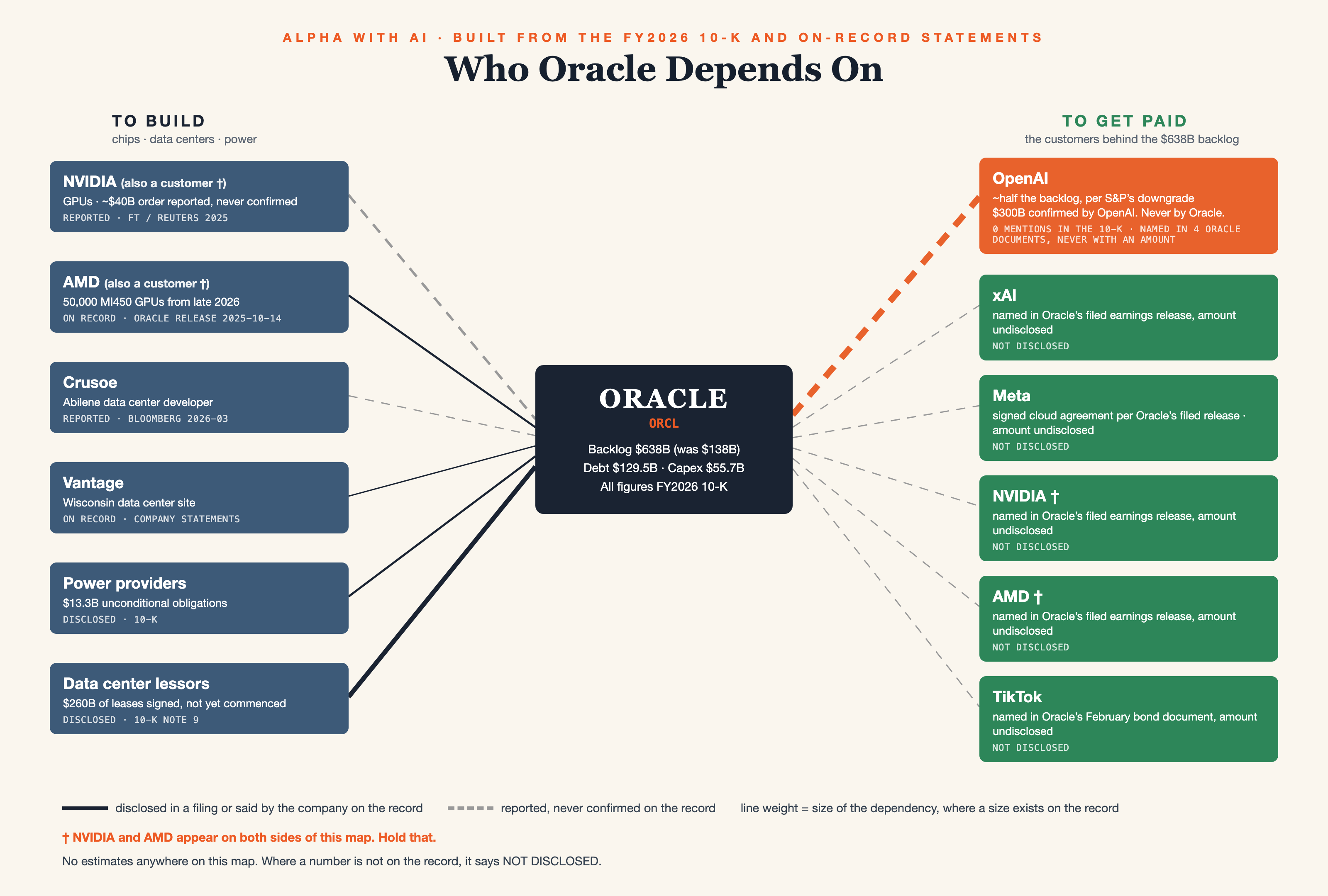
Read the left side first. Two boxes carry filing numbers, and they are enormous: the $260 billion of leases that have not commenced, and the $13.3 billion of power. The chips above them split by receipt: AMD solid, NVIDIA dashed. Now the right side. Six names, and five of the six boxes say NOT DISCLOSED. That is not my map being lazy. That is the actual state of the public record on $638 billion of promised revenue. And the orange box holds the one number on the record, confirmed only by the company that owes it.
One more thing before we move on. Look at which two names appear on both sides of the map. NVIDIA and AMD sell to Oracle on the left and buy from Oracle on the right. Hold that. It is the entire next step.
The question I am actually asking: for every name on this map, what would I show a skeptic who demanded proof? Where the answer is nothing, the map says nothing, out loud.
STEP FOUR: WHO APPEARS ON BOTH SIDES?
The principle: when your supplier is also your customer, the demand signal needs a second look. Money flowing in a straight line is easy to read. Money flowing in a circle is not, because some part of the boom on each side of the arrow is financing the boom on the other. This step exists to find the circles, and no supply chain tool I know of asks for them.
I told you to hold one observation from the map. Time to pay it off.
The prompt I gave the tool:
put the two sides of the ledger next to each other. which names appear on both sides? for each one: what flows out, what flows in, and the receipt grade on every arrow. then pull everything in the filing about financing between Oracle and its counterparties, in both directions: customers prepaying Oracle, Oracle extending payment plans to customers, Oracle guaranteeing anyone else's borrowings. exact quotes and citations. then line up the durations: the debt, the leases, the customer contracts. save it as markdown.What it returned:
Two names sit on both sides of the map.

NVIDIA: money out for chips, a reported $40 billion order, dashed line. Money
in as a named cloud customer, size NOT DISCLOSED.

AMD: money out for 50,000 GPUs, on the record in Oracle's own release. Money in
as a named cloud customer, size NOT DISCLOSED.

The financing, in the filing's own words, one clause, cutting both ways:
certain customer contracts carry a significant financing component "either
because the customer has made significant prepayment before the corresponding
performance obligations are delivered or because we have provided long-term
payment plans to the customer."

Oracle has also guaranteed up to $3.3 billion of a data center landlord's
borrowing, maturing September 2026.

The durations: $43 billion of senior notes issued this year in fourteen
tranches, maturities to February 2066, coupons up to 6.85 percent. Total
borrowings up 40 percent in a year, $92.6 billion to $129.5 billion. Leases of
fifteen to nineteen years, most not yet commenced. And the one customer
contract with a public size: reported at roughly five years.
So Oracle pays NVIDIA for chips, and NVIDIA pays Oracle for cloud. Oracle pays AMD for chips, and AMD pays Oracle for cloud. Every piece of that is sourced, and nothing about it is improper. But be honest about what it does to your ability to read the business from outside. The demand on the right side of the map is partly coming from the companies being paid on the left side of it. That is not an accusation. It is a reading difficulty, and no rule requires anyone to resolve it for you.
Now the clause, because I want you to see both of its arms in the open.
Prepayment is the good direction. The customer pays before the work is done, the cash sits in Oracle’s hands, and the customer carries the risk. And on the June earnings call, Oracle put a number on that direction: roughly $75 billion of the book is prepaid or customer-supplied hardware. Real cash, real chips, already delivered.
The payment plans are the other direction. Oracle lending its own customers the time to pay for what they promised. Which contracts, and how large, the filing does not say.
That second arm has a history, and the history is why I refuse to shrug at it.
In the late 1990s, the companies selling telecom equipment started financing the customers who bought it. Lucent, the biggest equipment maker in America at the time, committed more than $8 billion in loans and guarantees so that young carriers could keep buying Lucent gear. The sales were real on paper. The backlog looked magnificent. Then the funding markets closed and the customers started dying. Winstar, a carrier that had signed to buy up to $2 billion of Lucent equipment with Lucent itself financing the purchase, went bankrupt in April 2001, and Lucent took an $845 million charge to fully reserve what that one customer owed it. The next fiscal year Lucent lost $16.2 billion and the stock fell below a dollar. The equipment makers had quietly become lenders to their own demand, and when the borrowers died, the backlog turned out to be a mirror, not a market.
I am not saying Oracle is Lucent. Oracle’s named customers include some of the most valuable companies on earth, a fair slice of its book is prepaid rather than lent, and the differences matter as much as the rhyme. The rhyme is not the size and it is not the outcome. The rhyme is the structure: a supplier whose reported demand depends, in part, on customers it also finances.
Now line up the durations the ledger pulled, because this is where the circle stops being a curiosity and becomes the risk. The debt runs to 2066. The leases run fifteen to nineteen years, and most have not started. The one customer contract with a public size is reported at about five years, and Step One already flagged the filing’s own admission that the lease terms typically do not align with the customer contracts sitting on top of them.
Forty-year money, funding twenty-year leases, resting on five-year promises.
Every arrow in that sentence carries a receipt. What none of the receipts can tell you is whether the promises will still be there when the leases commence. That question belongs to the one box on the map no filing can reach.
That is the last step.
The question I am actually asking: how much of the demand on the right side of this map is financed by the left side, or by Oracle itself? The filing admits the mechanism exists in both directions. It quantifies one of them.
STEP FIVE: WHAT CAN THE MAP NOT SHOW?
The principle, and the reason this step comes last: a filing’s silences are information too. Four steps built a map out of receipts. The fifth step reads the holes in it, because on this map, the holes are where the risk lives. Most research hides its gaps. This workflow ends by listing them.
The prompt I gave the tool:
last step. from the saved files only: everything this map cannot tell us. every material NOT DISCLOSED, every private counterparty with no public financials, every term the filing references but does not contain. then a watch list of dated, checkable items that would change the map, tied to the next filings. no opinions, no recommendations. save it as watch-list.md.What it returned:
The map cannot tell you how the $638 billion splits by customer. No document
discloses it. S&P's "roughly half" is a rating agency's estimate, the closest
thing to a number that exists.

It cannot tell you the contract terms. Termination rights, take-or-pay
clauses, remedies if a customer walks, and which contracts carry which arm of
the financing clause. All NOT DISCLOSED.

It cannot tell you when the $260 billion of leases starts converting from
commitment to cost, beyond "fiscal 2027 to 2029."

And it cannot tell you anything, at all, about the financial condition of the
counterparty in the orange box. OpenAI is private. It files no 10-K. It
publishes no audited statements. One whole side of the biggest dependency on
this map sits outside the reach of every verification tool this workflow has.
Sit with that last one, because it is the finding under all the other findings.
Here is what the public record offers on that counterparty instead, every piece of it company-stated or reported, none of it audited: revenue of about $2 billion a month, roughly $24 billion a year. Not profitable. A $122 billion funding round closed in March at an $852 billion valuation.
Now my arithmetic, from those figures. A commitment that exceeds $300 billion over five years averages more than $60 billion a year, payable to one vendor, by a company currently generating about $24 billion a year in total revenue. That gap is the entire Oracle debate. And no document on either side of it lets you close the question, because one side of it does not file documents.
Oracle’s filing cannot name any of this. But read its risk factors knowing what you now know, and you can watch the lawyers describe it anyway. “Some of our customers may be highly leveraged and subject to their own operating and regulatory risks.” If key customers cannot perform, Oracle “could be locked into multi-year commitments for excess data center space and related capital expenditures, as well as associated financings, without receiving corresponding revenue.” And the quiet one, the accountant’s version of a scream: changes in key customers’ ability to pay could require “evaluation of the recoverability of related long-lived assets.” In plain English, if a big customer walks, Oracle tests its data centers for write-downs.
The market has already rehearsed this once. On April 28, a single report that OpenAI had missed user and revenue goals knocked Oracle’s shares and pushed the cost of insuring Oracle’s debt to two-week highs. One reported miss, by a company that discloses nothing, moved the price of Oracle’s risk. That is what it means to have half a backlog resting on a counterparty nobody can audit.
So the last output of the workflow is not a verdict. It is a watch list, saved as a file next to the map, of dated, checkable things that would change the picture: the backlog print each quarter and the 12 percent slice actually converting. Capex against S&P’s $90 to 95 billion projection, and free cash flow with it. S&P’s own published tripwires for the next cut, leverage sustained above 4.5x or no credible path to positive free cash flow by fiscal 2029. The $260 billion of leases as they commence. The securities class action filed in February about the cloud infrastructure business, because discovery has a way of surfacing what filings do not. And the simplest one: whether any future Oracle document ever attaches a name to the backlog, or whether the company in the orange box ever starts filing documents of its own.
The day either happens, half this map lights up.
There is a live market on exactly this. On Polymarket, real money trades all day on when OpenAI files to go public.
The day that market resolves yes, the dark side of this map starts filing documents, and half the boxes light up. Until then, the odds are the crowd’s best guess at when the lights come on. A guess is not a disclosure.
NOT DISCLOSED is not an empty cell on this map. It is the finding.
The question I am actually asking: what would I need to see to verify the most important box on this map? Today, there is nothing to see. Knowing that is not a failure of the method. It is the method, telling the truth.
What the Map Told Me, and What It Could Not.
Step back from the five steps and look at what actually happened here.
The machine read a 10-K, then a quarter century of filings, then the public record around them, and built a map where every line is a receipt. It found customer names in a bond-sale document that the annual report withheld. It caught a name hiding behind a spelling. It put NOT DISCLOSED on nine boxes and never once filled a silence with an estimate. That part is real, it is repeatable on any ticker, and it is yours now.
But a map is not a verdict. And I owe you the other side of what the documents say, because the receipts cut in Oracle’s favor too.
This is not a company breaking on its operating numbers. The same filing that holds the $638 billion shows operating cash flow of $32 billion, up 54 percent in a year. Cloud infrastructure revenue grew 77 percent, to $18.1 billion, and cloud is now more than half of everything Oracle sells. The near slice of the book alone, the roughly 12 percent expected to convert within twelve months, is bigger than the entire company’s revenue last fiscal year. And the agency that cut the rating attached a stable outlook while doing it.
So hold both pictures at once, because both are true, and neither cancels the other. A cash machine growing at a speed no company this size has any right to. And a book of promises that is enormous, concentrated, unnamed, and partly unverifiable. The downgrade was never about what the business earns today. It is about the shape of the promises, and whether they will still be promises when a quarter trillion dollars of leases starts commencing.
What the machine could not do is decide any of that. It cannot tell me whether the company in the orange box performs for five years. It cannot tell me whether forty-year money against five-year promises is discipline or hubris. It cannot tell me whether to own the stock. That was never its job.
This is not a recommendation. It is a demonstration.
What I can tell you is what I trust. The map, because every line on it is a receipt. And the watch list, because every item on it is dated and checkable, so when the next filing lands, the machine reads it against both and the picture updates in minutes. That is the whole trade this edition offers: not my opinion about Oracle, but a way to make sure every opinion you hold can point at its receipts.
Trace It Yourself.
Everything in this piece lives in files, not memory. The filing quotes, the accession numbers, the receipts ledger, the watch list, the map. Every figure traces to a file, and every file traces to a primary source. If a number bothers you, trace it. The 10-K is free on EDGAR, accession 0001193125-26-277521, and every sentence I quoted is findable with your browser’s search box. That is the standard this newsletter holds itself to, and it is the standard I want you to hold me to.
And the five questions are yours now. Who does it depend on to build. Who does it depend on to get paid. What is the receipt behind every name. Who appears on both sides. What can the map not show. Point them at the company everyone in your feed is arguing about, in that order, and demand a receipt at every step. The map you get will be smaller than the ones the estimate-dressed-as-data crowd publishes.
It will also be true.
If this changed how you will read the next giant backlog number, tap the ♡ like. It tells the algorithm to put this in front of more investors who would actually use it, which is the whole reason the free half exists.
The thematic parent of this piece: Is Big Tech’s AI Capex Mispriced? I Checked, with Claude Code. That edition built the verification discipline this one runs on. If your own stock is the one selling off, the triage lives in How to Tell If Your Stock Is Weak or Your Entire Sector Is Shifting. And the NOT DISCLOSED discipline was born in I Taught Claude to Pull a Company’s Whole Debt Structure from One Filing.
The setup that started it: How I Set Up Claude Code as My Investment Research Analyst.
The memory layer that makes it compound: the Obsidian edition.
*Disclaimer: Alpha with AI covers US-listed and other global securities for educational and research purposes only. Everything in this edition is my personal view. None of it is investment, legal, or tax advice, a recommendation to buy, sell, or hold any security, or tailored to anyone’s situation, and I am not a registered investment adviser or research analyst. Oracle appears here as a demonstration of a research method, not as a view on what you should do with the stock. I may hold or take positions in securities discussed, and my views can change without notice. Every figure traces to a primary public filing or a named public source, accession numbers on file, but filings can be misread and reported figures can be wrong, so verify against the source before acting on anything. AI tools, including Claude Code, were used in the research and drafting of this edition, with every number checked back against the filed documents. Investing carries risk, including the loss of capital. This content is not directed at any person in any jurisdiction where its distribution would be contrary to local law. Do your own research and consult a qualified professional in your jurisdiction before making investment decisions.*
Written by Shubham Borkar | Research & Insights by Shikshan Nivesh AI Team
Financial Clarity. Insightful Ideas.
One more thing. The referral program is live. If you know one investor who was staring at a red screen this week, send them this edition. Referrals earn you months of paid access, and they are honestly the single biggest way this newsletter grows.